


Workplace design is evolving from a brand reflection to an embodiment of belief. The standard, corporately branded office is fading; in 2026, designers will be focused on adding character and depth to the workplace.
Architectural details, art and accessories play a key role in purpose-led designs in which corporate identity and values will be expressed more subtly, fostering a more authentic connection to the space. Think of it as the anti-Severance movement: employees aren’t trapped in nameless buildings with sterile lights and endless, featureless hallways here. Instead, layered designs, thoughtful accessories, and story-driven spaces invite employees to linger, discover and connect — and even bring their own individuality to a space.
It would be easy to write off these aesthetic elements as inconsequential, but they are part of a holistic design strategy that informs the organization, operations and behavior in the workplace. At their best, these workplaces reflect both the company’s and its employees’ values and purpose, transforming them from a backdrop for work to a place where employees are realigned and reminded why their contributions matter. Beyond experience, this type of purpose-led design has been shown to drive tangible organizational outcomes such as higher engagement, lower turnover and stronger productivity.
Architectural Details
Character Is Key
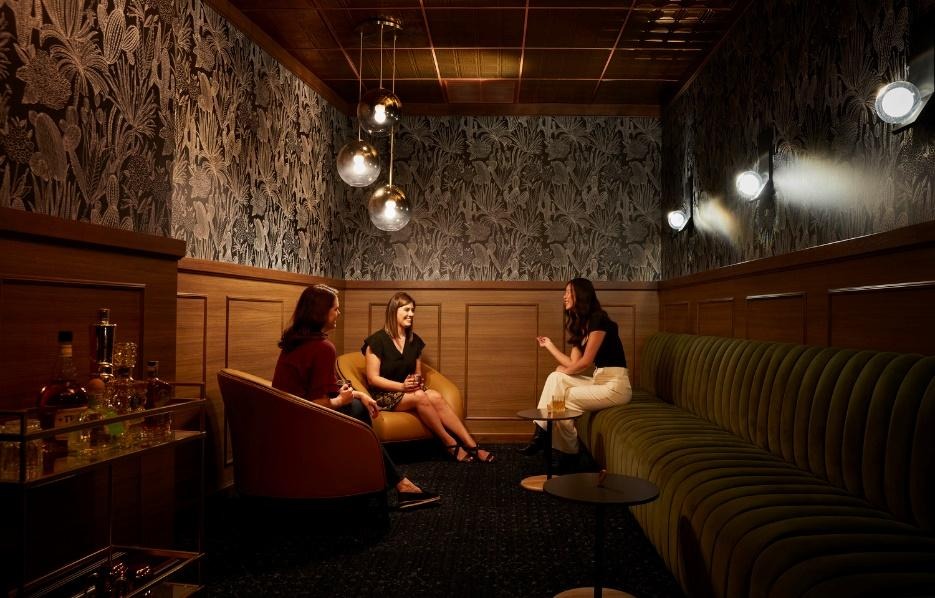
Rather than a branded graphic applied to a wall, corporate identity will be incorporated more subtly through architectural details that bring dimension and reshape the experience of the space. Intricate layering of lighting, materiality, hardware and unique millwork provides a richer baseline for the rest of the project, evoking a deeper sense of care. Residential and hospitality environments regularly see this level of attention to detail, and as employees expect more from their workplace, a move away from pure function is not surprising. Incorporating these elements can begin as early as the building selection, with some companies opting to occupy historic buildings that contain vintage elements or carry cultural significance that reinforce their own values and history. These details, big and small, tell the story of the space, connecting the company — and employees — to a larger vision.
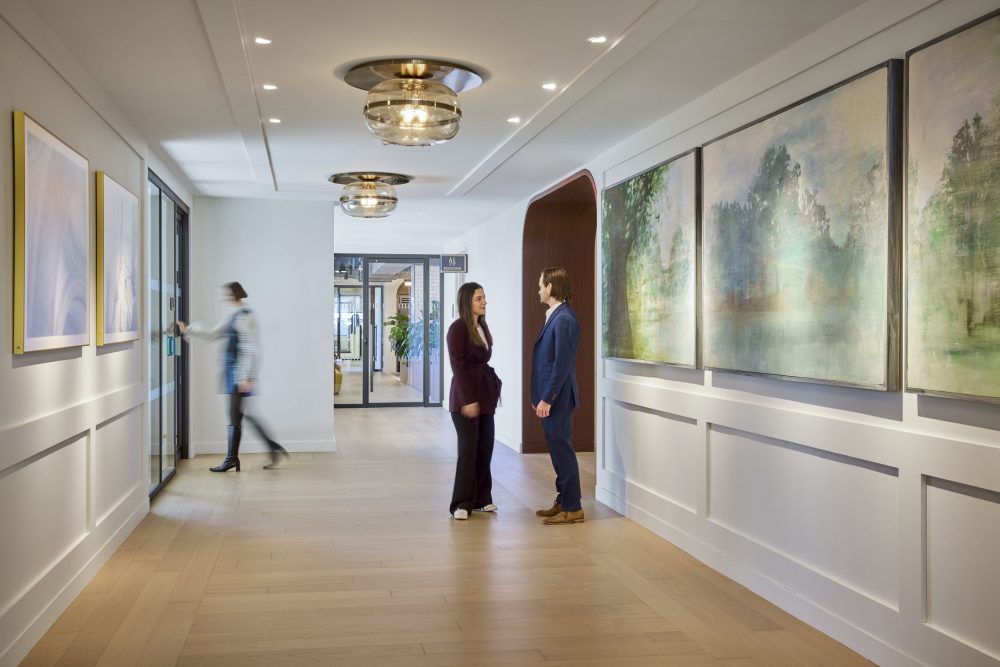
At Alvarium Tiedemann Global’s office relocation in New York City, the design detailed wood paneling, subtle curves and layered lighting over a base that was already warm and inviting. These details work double-time, as they reflect both the rich historical architecture of the surroundings and the heritage of the company, adding emphasis to a gallery of artwork that was moved from the company’s old office into its new space.
Trend Tips
- Including detail-rich or period-accurate lighting, especially in a common area like the entryway or breakroom, is a high-impact way to shift the feel of a space.
- Custom wallcoverings with corporate or regional motifs turn a blank wall into an opportunity for discovery.
- No detail is too small — architectural screens, cabinet hardware and signage that relate to a brand’s geometry infuse identity at every level.
Styling
This Time, It’s Personal
If architecture is sculpture — with its focus on void and mass — and interior design is an oil painting, where texture, light, and color create a masterpiece, then styling is a mosaic, with dozens (or hundreds) of little pieces coming together to collectively express the artist’s vision. There is an increasing emphasis on the styling of a space, since it gives designers the ability to select accessories that bring the space to life and speak to employees on an individual level, inviting them to linger in a space and discover something new.
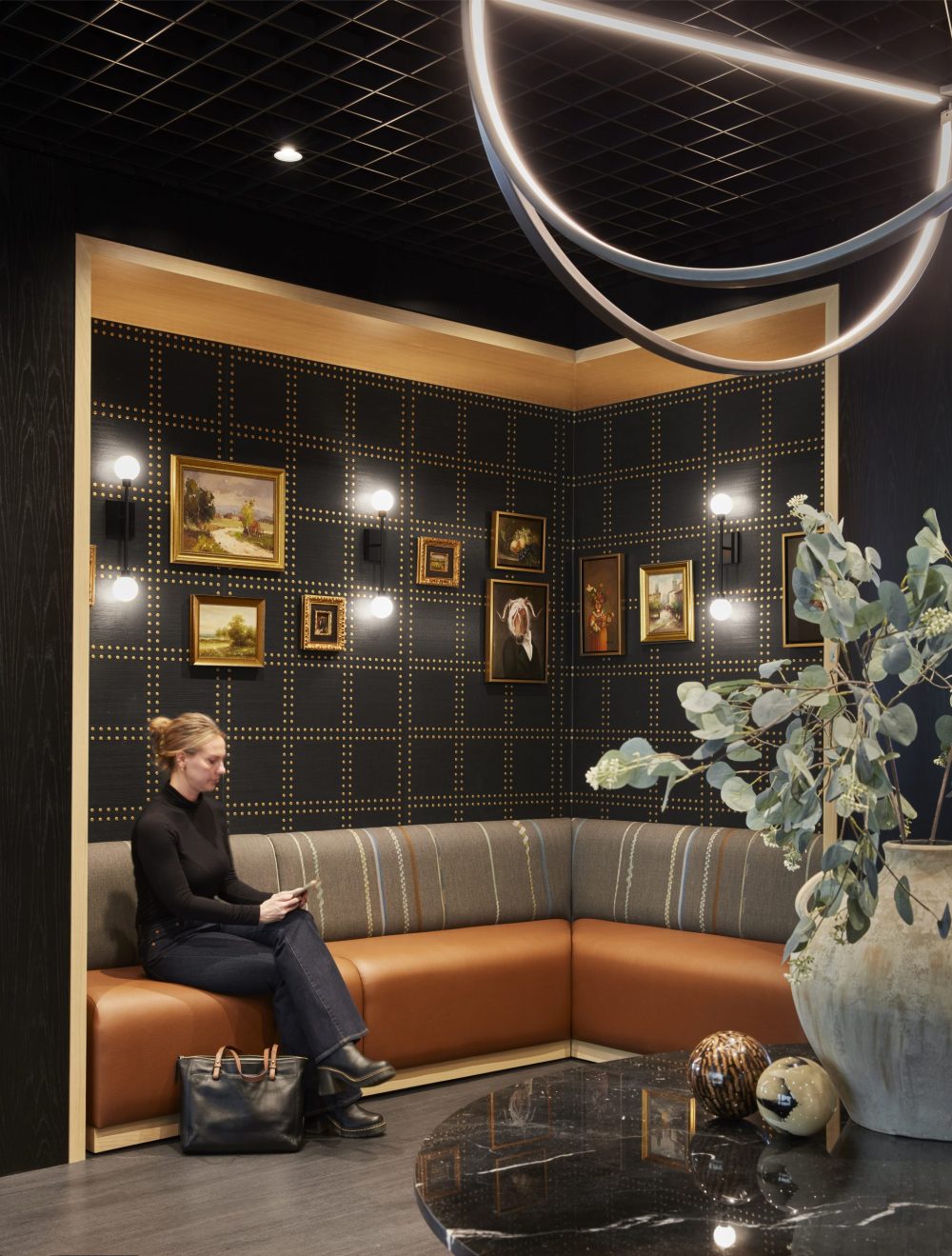
Thoughtful styling invites employees to uncover the company’s story in more granular detail than can be achieved with larger gestures. This is where a space’s character truly comes to life: a company’s identity is translated into tangible details — objects and accessories that speak to its purpose, people, and place. Sometimes that means selecting decor that reflects the locality of the office, such as artwork or handmade pieces from regional artists. Other times, the connection is to the work itself — a nod to industry, history, or craft, like a bull and bear in a financial setting, vintage tools like rail spikes for a transportation client, or sculptural vessels filled with coffee beans for a beverage brand. Styling can also celebrate culture and achievement, incorporating awards, artifacts, or objects that honor the organization and its team members. Each piece, thoughtfully chosen, helps tell a deeper story, connecting people not just to the space, but to the culture behind it.
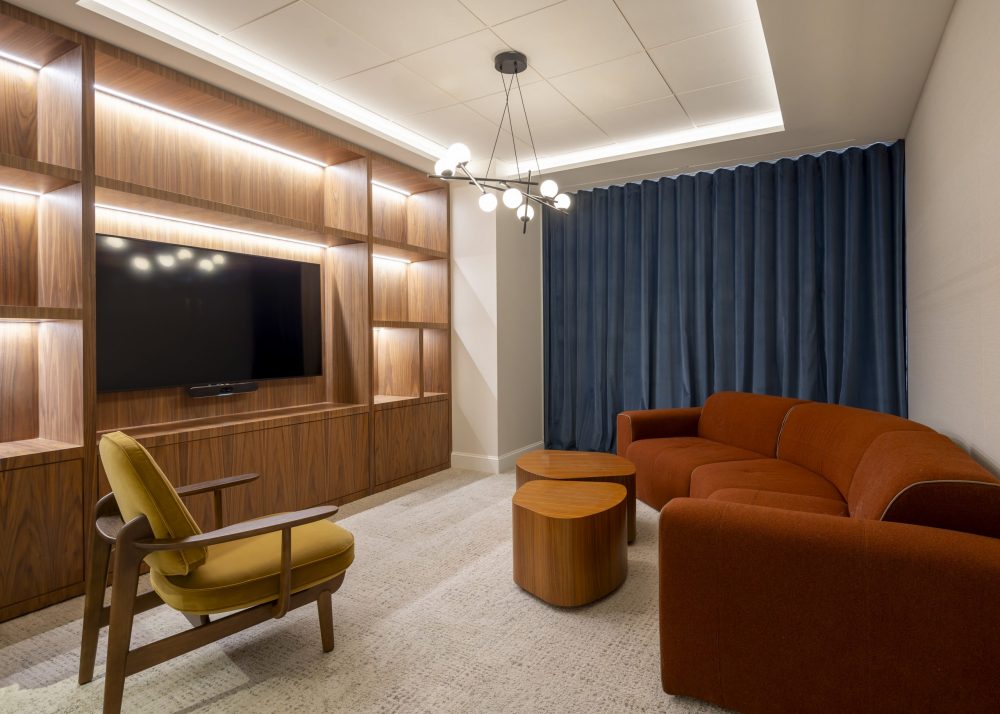
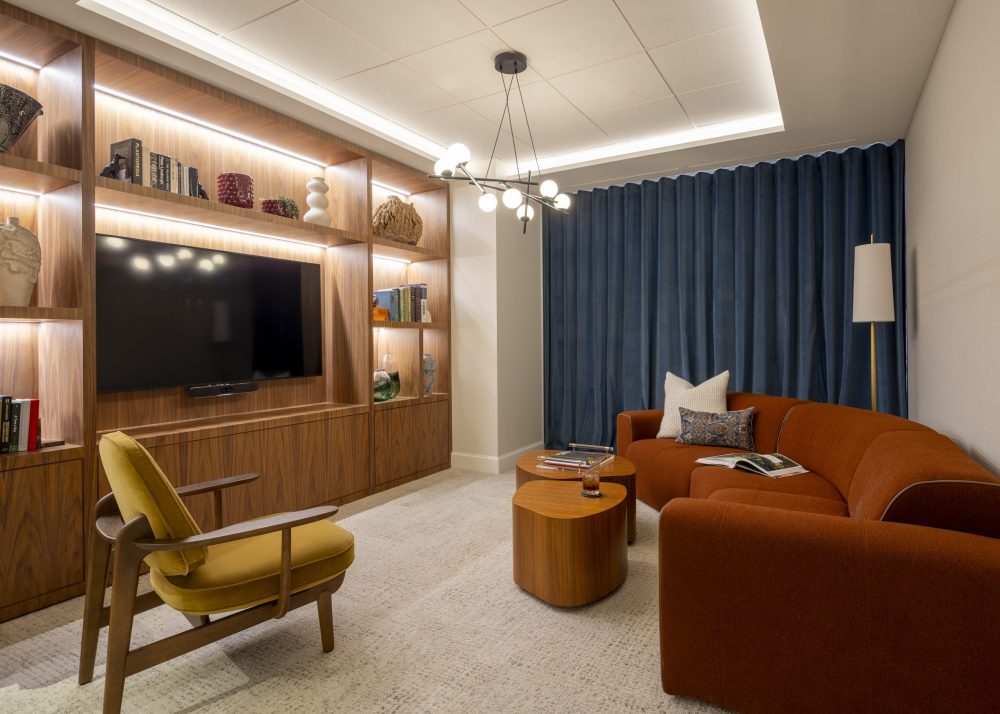
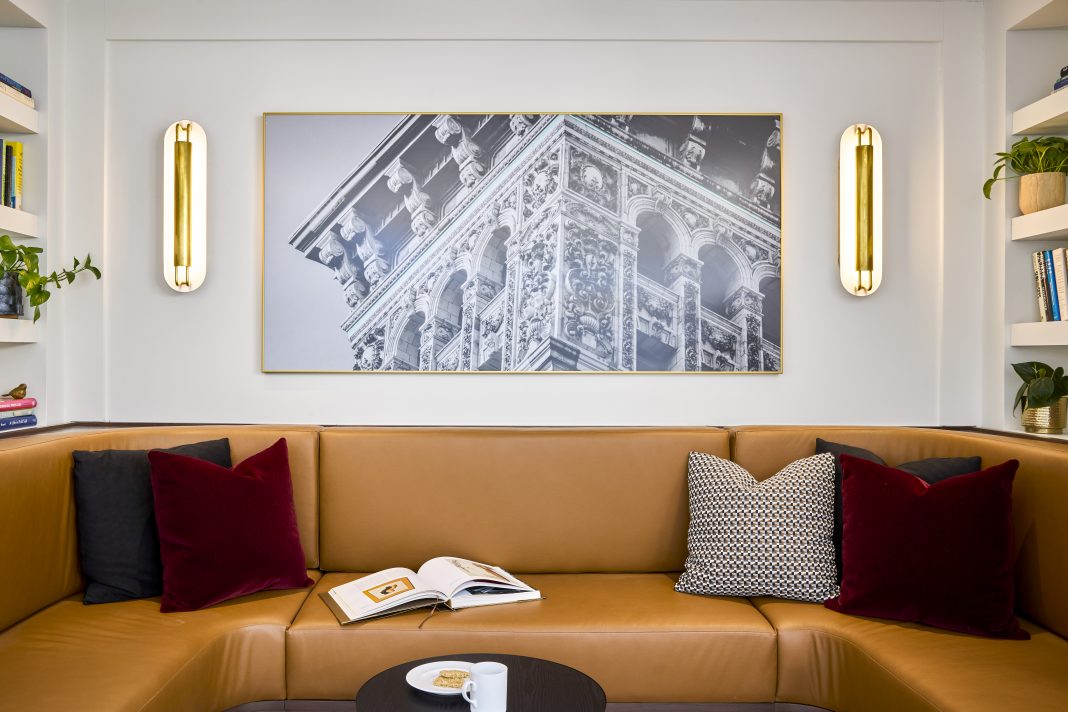
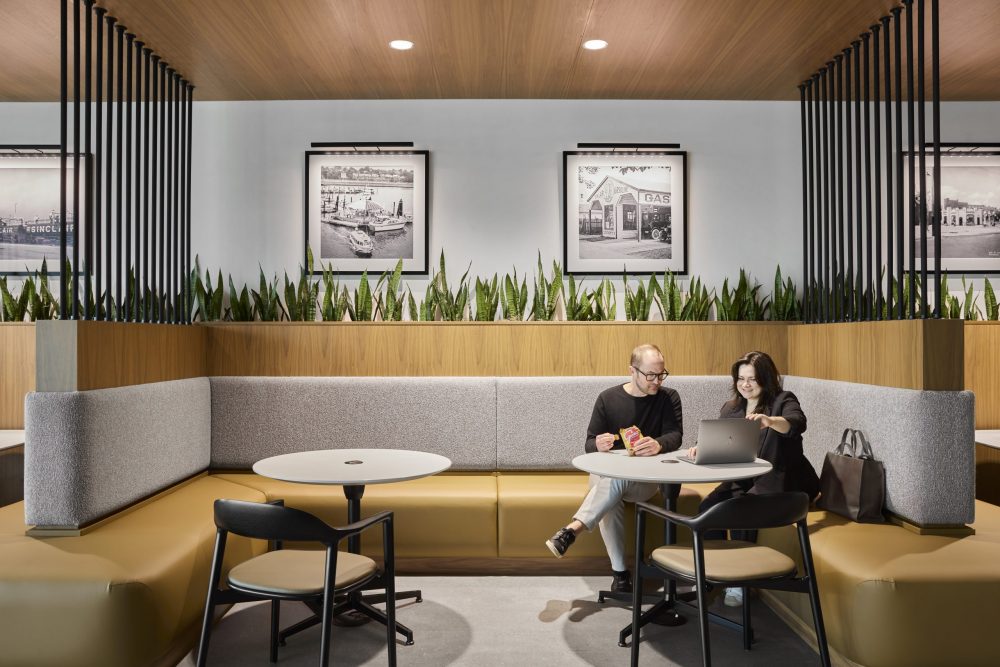
Especially for companies moving away from assigned seating to free address seating, styling can be a way to add personality to an office. In these spaces, desks lack the personal touches that employees bring to assigned desks. Instead, layers of curated books, tchotchkes, and other accessories enliven communal areas. By styling the lounge at the Brunswick Group’s Dallas office, designers were able to add life and personality to the space. Styling created a lived-in look that contributes to the overall character and storytelling of the space, making it a place where employees want to spend time.
Trend Tips
- In unassigned environments, give employees a place to share something of themselves — a child’s artwork or a pet photo — with a pin-up wall near their workstations.
- Appeal to individuality — not every accessory will resonate with everyone, but everyone can connect to at least one piece.
- Think local for accessories and include regional art, materials, or motifs to help ground the space in its environment and instill a sense of “hometown” pride and belonging.
Art Programs
A New Kind Of Value-Add
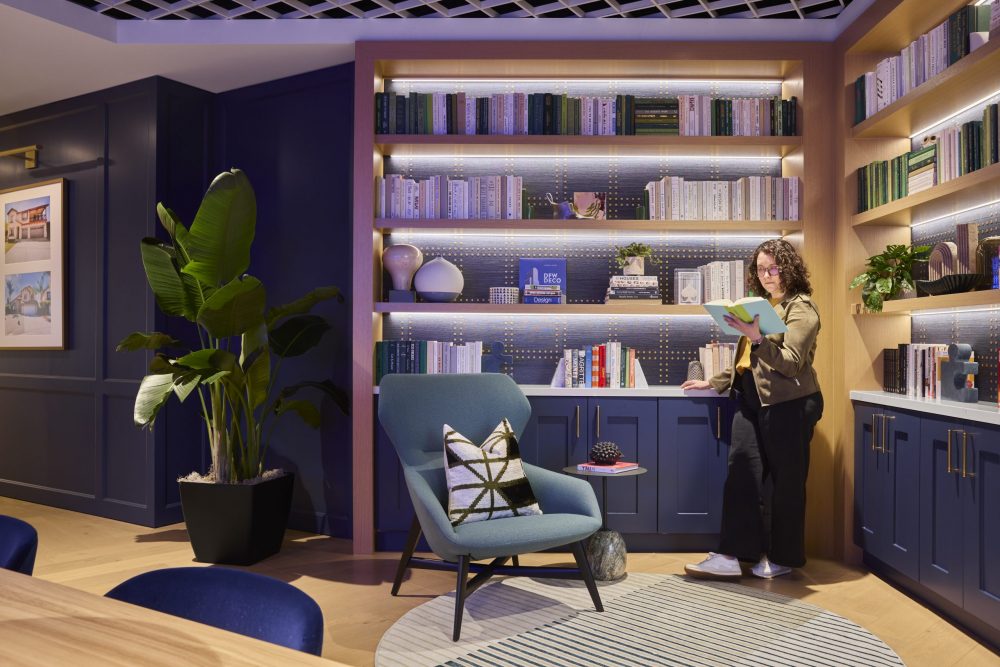
More than ever, companies are finding value by investing in workplaces that reflect region, culture and history as well as the values of the employees walking through their doors. Art programs are a growing part of this effort, and one that has multiple benefits. Research shows that art in the workplace mitigates negative emotional affect, increases cognitive functioning and stimulates creativity. It also fosters curiosity, engagement and a sense of connection and belonging among employees. Depending on the type, placement, sensory engagement and duration of exposure, workplace art can positively influence well-being, collaboration and inclusivity, making it a strategic investment in both people and organizational culture.
Successful art programs consider not just what is displayed, but how, where and why. They have the unique ability to create a dialogue between the company and the community, and between employees themselves. Best practices for art programs include engaging with both the local art community and employees during the selection process and curating art that is representative not only of the larger organization but individuals as well. This ensures an inclusive, diverse program that helps companies articulate their values and identity while also resonating with individual employees. When art is integrated early in the design process, it becomes part of the space’s narrative rather than an afterthought. Whether it’s a bold mural, a sculptural detail or a quiet photograph, each piece signals intentionality, care and respect for craft, culture and individuality, helping employees reconnect with purpose and pride in where they work.
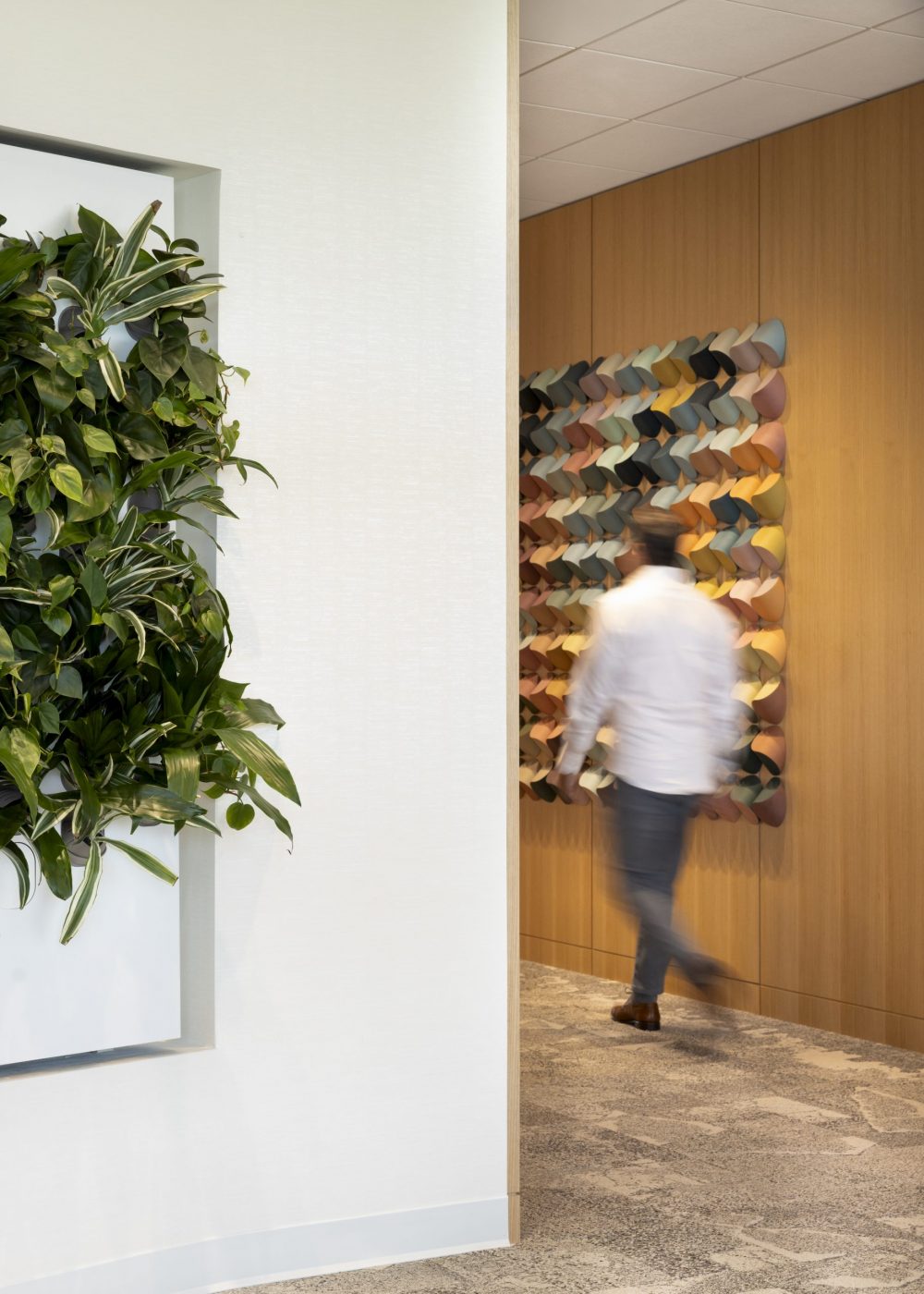
For the art program at the TIAA Frisco Corporate Center, Corgan designers, in collaboration with Art+Artisans, sourced more than 90 pieces of art from diverse local artists, including interior displays, exterior sculptures and murals. To invite dialogue and engagement, QR code signs that link to the artist information were placed at each piece. In this way, the company’s investment in its art program doesn’t just bring meaning to the space, it connects employees to each other and encourages ownership of the workplace.
Trend Tips
- Think outside the frame (especially if wall space is limited) with digital art, suspended installations or free-standing sculpture.
- Locate art in social areas, away from workspaces — research shows this creates a greater positive distraction while allowing personalization at individual desks.
- Engaging employees with “meet the artist” events or inviting input during curation fosters ownership, dialogue and a stronger connection to the art program.
Made With Care
The most successful workplaces in 2026 will be ones that are layered with thoughtful details, full of both care and character. Through an alchemy of curated details, a standard office can be transformed into a distinct and meaningful workspace that doesn’t just draw employees in once, but again and again. The thought and craftsmanship that go into these details communicate care in a way that employees can recognize. It’s not just showing off splashy design or sleek branding — it’s showing respect for each individual who walks through the company’s door.
Special Thanks to Our 2026 Trends & Predictions Supporter:

Let’s design spaces that resonate and inspire great work. Explore the Resonant Spaces collection.