
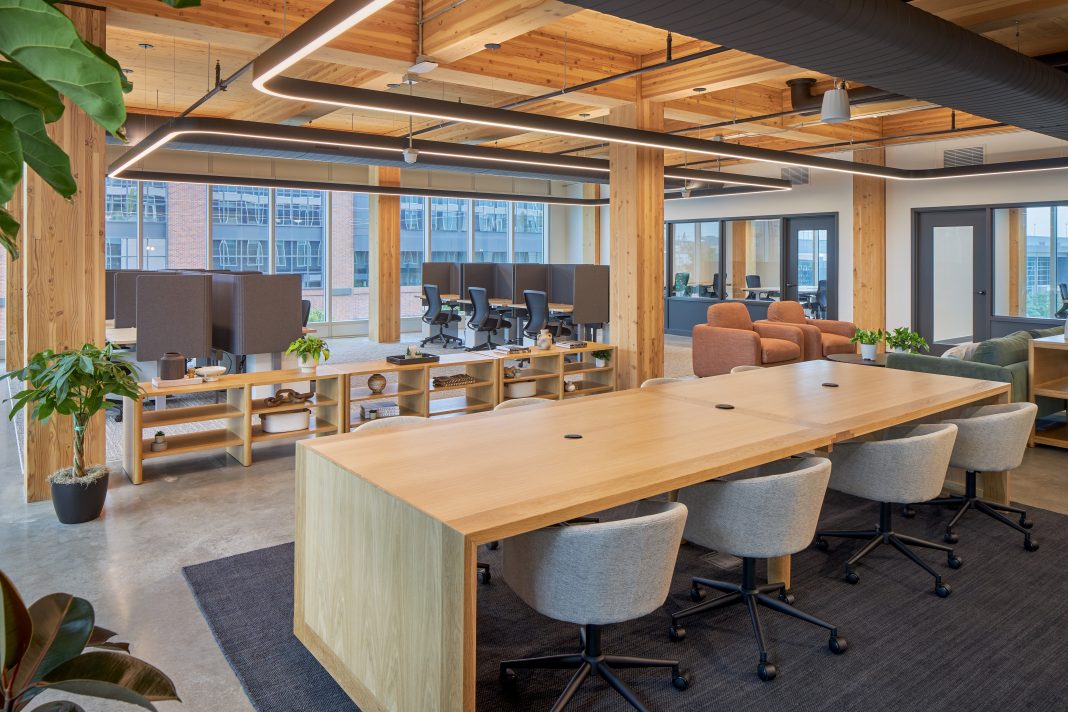

A case study about how to tap into the soul of community for workplace design that connects beyond the digital world.
The “Anywhere” Problem
In modern design, the default is often standardization. Scaling companies frequently choose a “kit of parts”—a replicable, one-size-fits-all aesthetic designed for speed. While efficient, this approach creates sterile, placeless environments. When an office in Cincinnati looks identical to one in Austin or Seattle, we strip away the human context. We create spaces that could be anywhere, which ironically makes the people inside them feel like they are nowhere.
The Crisis of Connection
This sense of being “nowhere” isn’t just an aesthetic failure; it is a social one. Amidst rising societal division, a loneliness epidemic, and the disconnection of a digital world, we can no longer afford to build for efficiency alone. When humans become collateral damage to standardization, the consequences are measurable. According to the American Psychological Association’s Stress in America survey, one in two U.S. adults reports feelings of loneliness, with many citing societal division as a major stressor. This isolation is more than a feeling; it is a health crisis linked to depression, anxiety, fatigue, and headaches. Also, an argument can be made that there is a link between social isolation and civic stability with Gallup research suggesting that individuals who feel excluded or lonely are more likely to accept political violence as a solution.
To address the needs for human understanding and connection, the future of workplace design must include design localization. The most successful workplaces must be crafted for human connection, grounding users in the unique story of a specific place. As humans we are hardwired for connection and belonging and that starts with people next to us. To create these ideals though we have to create a space where the community is celebrated and promoted.
Design localization reflects place, tells human stories, fosters genuine connection, and promotes understanding and belonging within a community.
The Case Study: Scaling a Coworking Brand
When The Root, a coworking company based in Tulsa, expanded into the Omaha market, the challenge was clear: scale the brand without losing its soul. The goal was to translate the brand’s core values through the lens of local needs and culture, creating a space that felt both approachable and authentically “Omaha.” Across the project the design was curated for the location by using these four pillars: program, concept, materials and color, furniture and art.
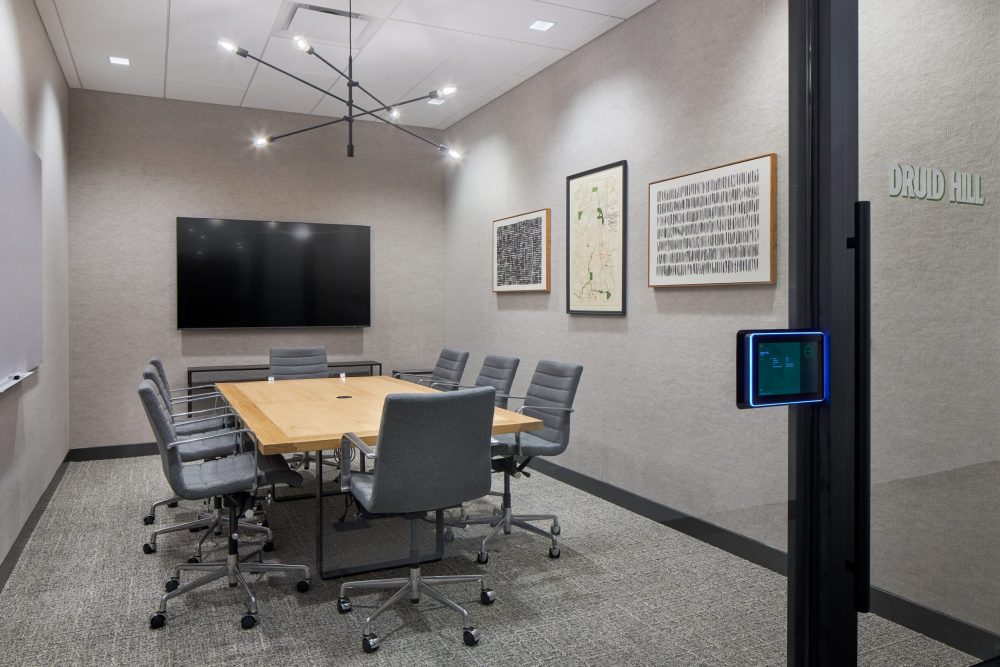
1. Program: Listening to the Neighborhood
Localization starts before a single finish is selected; it begins with the program. Standardized companies often have a rigid list of room types (e.g., “We always need three boardrooms and ten phone booths”). However, a localized approach asks: What does this specific neighborhood lack or need?
For one example from the Root’s Omaha location, the design team worked closely with the real estate team and operator to identify gaps in the local amenities. They discovered that the surrounding area, a new, developing neighborhood, lacked a high-quality public gathering space and was positioned in the neighborhood as a hub adjacent to a university, a creative neighborhood enclave, as well as high-profile corporate entities.
Consequently, the design included a dedicated training room amenity. This wasn’t in the typical program, but it solved a local problem. It supports neighboring students, provides a venue for major kickoff events essential for a new district, and opens up to the common area for large seminars, and supports collaboration and entrepreneur incubation. By tailoring the function of the space to the neighborhood’s needs, the building becomes a community asset, not just a private workplace.
2. The Concept: Weaving a Visual Narrative
Authentic design requires looking past surface-level stereotypes. For Omaha, the team moved beyond clichés like Warren Buffet or Omaha Steaks (even though they are wellknown) finding the city’s soul in its geography, architecture, culture, and history. The resulting concept, “Gridwork,” synthesized several elements:
- Geography: Omaha is still very connected to the farming community and the aerial views surrounding the city showcase a striking grid of sweeping farmland created by country roads and diverse agriculture.
- Architecture: Repeating, patterned, and interwoven brick work is found as a common visual language of Omaha’s historic architectural gems. Also, Prairie-style homes birthed in the Midwest and found within the city feature repeating grid patterns and windows featuring unique muntins.
- Culture: Quilting is a true Nebraska craft deeply rooted in the Heartland and the Midwest that combines history, artistry, and tradition.
- History: Omaha’s origins are found in the large square city blocks of the historic downtown grid alongside a strategic railroad network that provided an engine for the city’s industry.
The resulting design concept represents a careful synthesis of these foundational elements, creating a nuanced abstraction of Omaha itself. The finished aesthetic manages to strike a perfect balance between being familiar enough to evoke a sense of comfort and local belonging, yet subtle enough to not beat you over the head with a literal stereotype. This narrative was reinforced across all the elements of the project from millwork, finishes, colors, furniture, and art.
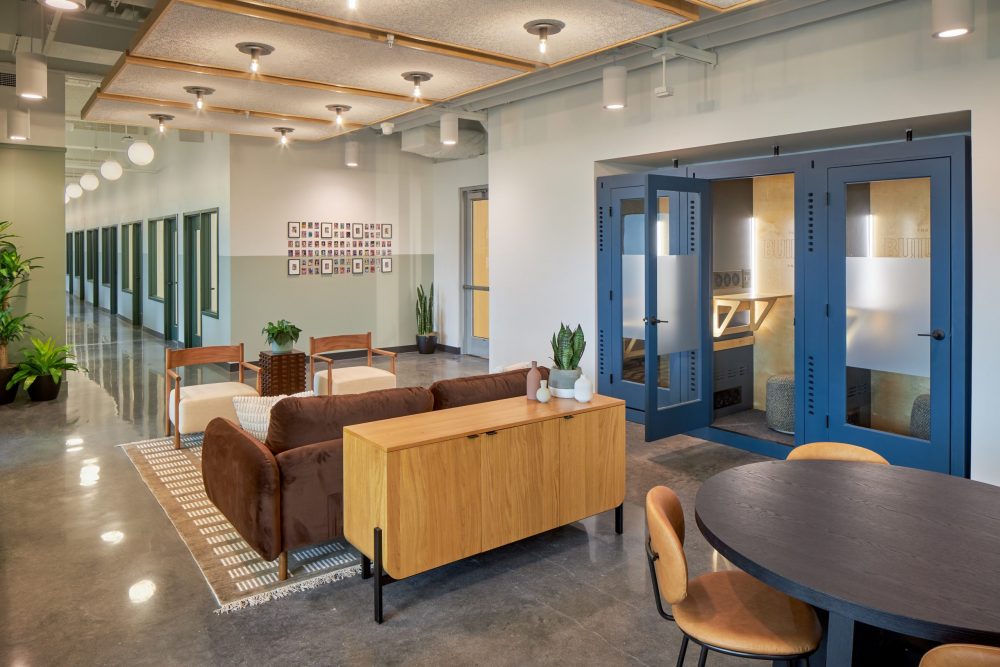
3. Materials and Color: Creating Continuity in Place
Effective design avoids fighting the existing architecture. True localization requires paying attention to the building’s materials and architectural language to integrate it into the interior for seamless continuity.
The Root project exemplifies this, deriving its interior palette from the building and location. The structure, a mix of traditional timber and exposed blackened steel with sleek concrete, informed a modern yet warm material palette. The suite’s interiors needed to maintain continuity with the building’s overall architectural language while establishing a distinct identity. It played between the neighboring buildings as well, fitting between corporate commercial office buildings and historic brick creative office buildings both in the neighborhood.
The design utilized an earth-tone palette referencing the surroundings: tonal greens from the farmland and terra cottas mimicking the regional clay bricks. The project’s conceptual framework was directly reinforced by the detailing, particularly some feature flooring in the break room and training room, which employed a sophisticated grid pattern. This localized approach ensured every element contributed to a cohesive, deeply contextualized design narrative.
4. Furniture and Art: Storytelling and Representation
Localization can significantly influence furniture and art selections, ensuring continuity across the project. Also, engaging local artists and artisans provides designers integration of authentic, meaningful elements that resonate with occupants and foster a sense of pride. Below is a list of ways to incorporate localization through furniture and art.
- Prioritize Local Sourcing and Partnerships: Select furniture and art from local suppliers and artisans to support the local economy and integrate authentic craftsmanship.
- Engage Local Experts: Collaborate with local experts for invaluable insights into the community’s history and culture. For the Root, the design team connected with a local history blogger that wrote specific articles about the history of certain neighborhoods in Omaha and offered rights to photography they had as well.
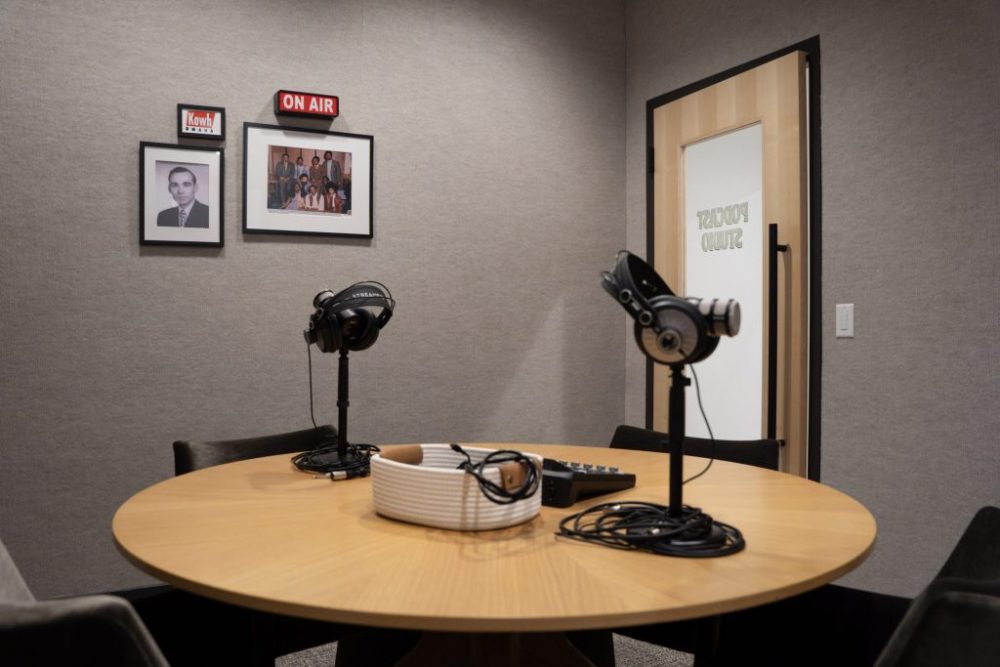
- Elevate Art to Storytelling: Move beyond generic “corporate art” to commissioned site-specific pieces that literally represent the surrounding community and its history. For the Root, vintage portraits of DJs from a well-known local radio station on the podcast room.
- Place-making Wayfinding: Use culturally relevant and historical local references for naming rooms and wayfinding. For the Root, meeting rooms were named after stations of a historic local rail line that is now decommissioned but served the residents of the community for years.
- Commission Diverse Bespoke Collaborations: Partner with a diverse range of local mediums (e.g., weavers, collage artists, sign painters) to create unique, custom installations.
- Signal Inclusion and Belonging: Ensure commissioned art and design elements reflect the diverse voices and heritage of the community, signaling that these identities are valued and belong.
- Acknowledge and Network: Credit all artwork with the local artist’s name and invite fabricators and artists to project openings to encourage networking and connections with the people who use the space.

The Bottom Line: Design for Community Connection
In a divided world, efficiency is no longer the primary metric for success; belonging is. We must look past standardized templates to create environments that facilitate genuine human connection. When we embrace localization, we transform real estate from a mere asset into a community anchor. This shift allows us to move past the “anywhere” office to build for the soul. Because when we design for a place, we ensure the people inside don’t just occupy a space – they belong to it.