

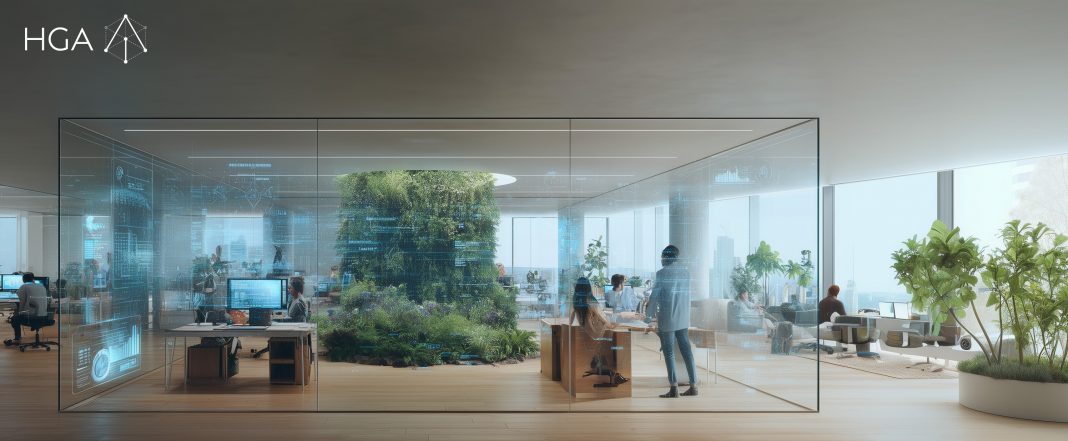



This new era of data-driven design is transforming offices into living, responsive environments that boost motivation, connection and well-being.
Workplace design is entering a new era. As data becomes a defining layer of the workplace experience, designers are moving beyond using metrics to inform space—they are leveraging technology to actively shape it. The next frontier of workplace design lies in creating environments that are adaptive, responsive and highly personalized.
Advanced tools—from AI-driven analytics to wearable sensors and behavioral tracking—have transformed data into a design catalyst. We are seeing concepts once confined to science fiction quickly become tangible realities. For example, wearables could deliver real-time insights into AI immersive workplace environments that recognize mood, predict needs and adapt to support engagement, collaboration and well-being.
With these tools in place, data will do more than inform decisions—it will fuel environments that respond dynamically to how people choose to work.
Boosting Engagement and Motivation
Gamification is emerging as a powerful, data-driven strategy for enhancing engagement in the workplace. By integrating game-inspired principles—points, leveling up, immersive storytelling, digital social connection and recognition—designers can create environments that motivate employees, encourage growth and celebrate achievement.
Forward-looking design strategies for gamified engagement could include:
- Designing digital or physical achievement walls that visualize progress and celebrate wins
- Creating interactive collaboration zones that encourage creativity and reward innovation
- Using dynamic lighting, color and spatial cues that respond to team energy levels or milestones
- Integrating digital platforms that allow employees to set goals and receive real-time feedback
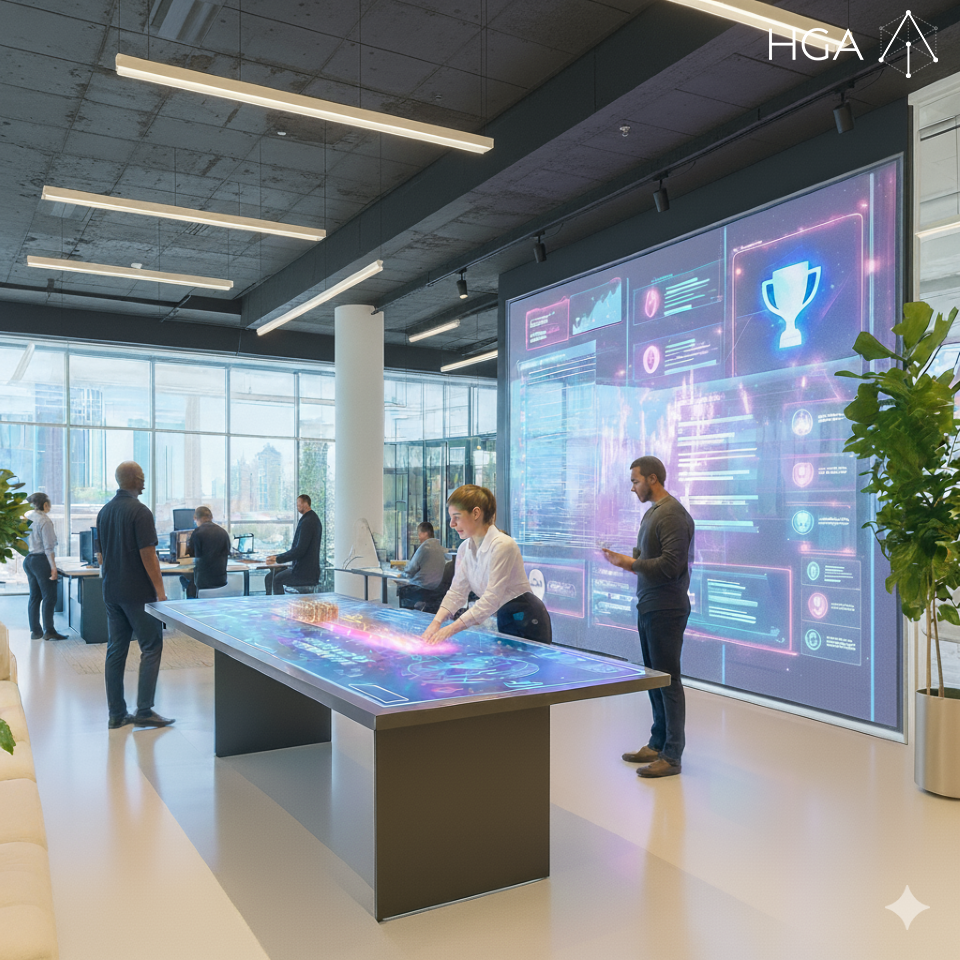
These design elements have the ability to tap into intrinsic motivation, making work more interactive and rewarding. They also address the needs of a multi-generational workforce, engaging digitally fluent younger employees while providing recognition and shared purpose for experienced professionals.
Strengthening Culture and Collaboration
Data-driven tools are also transforming how organizations cultivate culture and collaboration. Foot traffic sensors, meeting-pattern analytics and heat mapping can reveal where interactions naturally occur, enabling designers to create layouts that encourage spontaneous encounters and deepen team connection. Opt-in wearables could add another layer of insight, capturing individual work rhythms to optimize seating assignments and signal when colleagues are on site and available.
Emerging design strategies for cultivating workplace culture and collaboration could include:
- Using analytics dashboards to visualize team interaction patterns and guide more intentional use of collaboration spaces
- Leveraging AI to suggest optimal rooms based on meeting type and team patterns, ensuring teams land in environments that best support the work at hand
- Designing AI-integrated rooms that automatically adjust tools and settings to collaboration mode, with simplified one-touch or voice-enabled AV
- Deploying flexible, easily reconfigurable furniture systems integrated with advanced audiovisual technologies to adapt to changing team dynamics and evolving needs, including communal zones for cultural rituals, informal gatherings and team-building activities that strengthen connection and belonging

By aligning technology with the ways people interact, create and connect, workplaces can evolve into living ecosystems that reflect and reinforce company culture while enabling employees’ best work. As a result, these spaces will feel as responsive and connected as the teams they support.
Promoting Health and Well-Being
With increasing accuracy, workplace data can enable profound advances in health and wellness. Opt-in wellness tracking systems, wearables and biometric sensors can monitor environmental conditions and individual preferences, helping create spaces that support focus, comfort and recovery.
Innovative design strategies for employee well-being could include:
- Implementing environmental sensors that monitor air quality, noise and activity levels to guide real-time adjustments
- Designing adaptive lighting, temperature and airflow settings cued by opt-in wearables that track wellness indicators
- Creating data dashboards that aggregate well-being insights to guide organizational initiatives and support social connection
- Using predictive analytics and AI modeling to identify patterns in employee movement habits, stress indicators and social interaction levels to enable proactive interventions
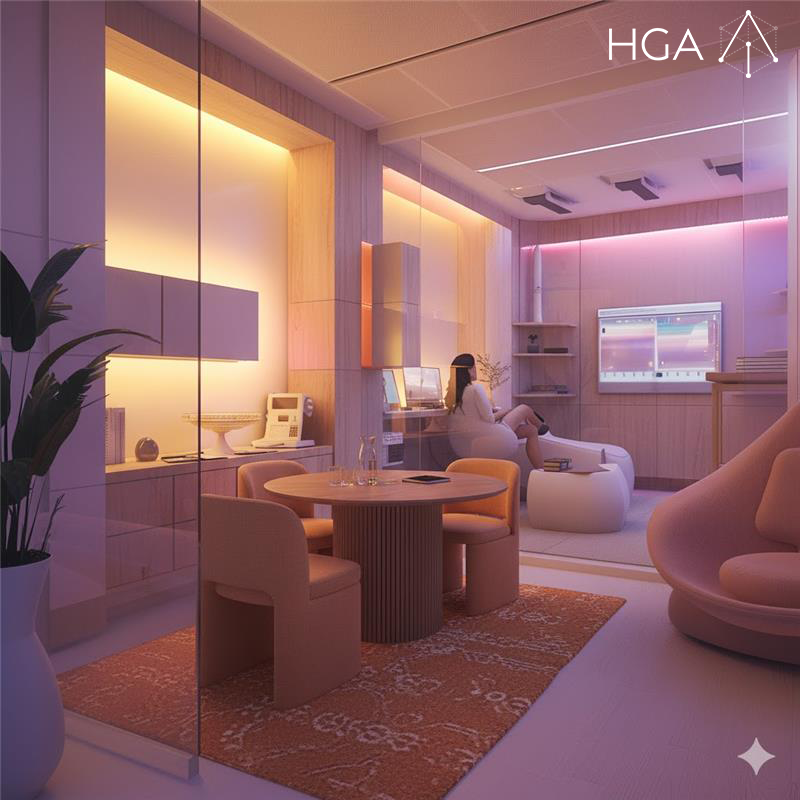
For organizations, these strategies position data as a powerful tool, optimizing the employee experience, informing space planning and supporting well-being with precision.
Ethical and Privacy Considerations
As technology becomes more deeply integrated into the workplace, new responsibilities arise. Privacy, consent and transparency are paramount, particularly as tracking extends between home and office. Companies must consider how these systems would affect inclusion, leadership practices, infrastructure and policy.
Ethical and privacy considerations are equally important in supporting employees who opt out of tracking while maintaining trust as new technologies are adopted. With wearables, sensors and AI systems, clear communication and opt-in frameworks are essential to ensure employees understand how their data is used and protected. Due diligence should be conducted with all primary stakeholders–including HR, legal, security and technology teams–to ensure a comprehensive and responsible approach to both design and the integration of new technologies.
As digital acceleration continues, designers and organizations alike will need to navigate not just what is possible; but what is right. Thoughtfully applied, data-driven design can cultivate motivation, well-being and connection across generations. The future workplace must go beyond information collection to learn, adapt and respond–creating environments that are both technologically advanced and deeply human.
Special Thanks to Our 2026 Trends & Predictions Supporter:

Let’s design spaces that resonate and inspire great work. Explore the Resonant Spaces collection.