

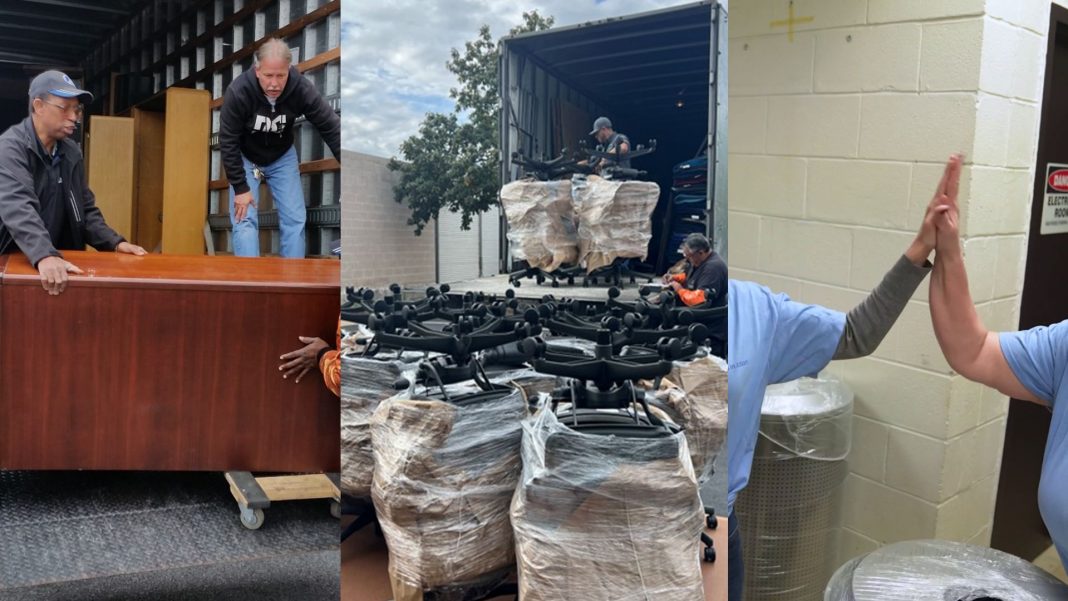

Circularity isn’t a sustainability buzzword—it’s fast becoming a core business strategy. At this year’s CoreNet Global Summit, Green Standards showed how leading companies are turning office decommissions into opportunities for impact, efficiency, and community connection.
After years in the business of workspaces, I’ve seen the same story play out: perfectly usable furniture, fixtures, and equipment (FF&E) abandoned in empty spaces. It’s wasteful and it’s a missed opportunity.
At Green Standards, we’ve built a circular model that helps companies reuse, donate, resell, and recycle surplus assets. The outcome? Lower costs, stronger community ties, and measurable impact results, all by design.
1. Recoup Costs Through Resale
When Indeed decommissioned its Austin office, we helped the world’s top job site resell 100 tons of furniture in less than a month. This is what we do for clients around the world, helping them get the best price for everything that can be resold. Of particular interest to our attendees were their warehouses, which we half-jokingly call above-ground landfills. The fact is, if you’re paying rent on a storage space with no immediate plans to use those assets, it may be time to find the next best use for those items. Based on what our clients have done in the past year, the average warehouse cleanout can pay for itself in six months.

2. Become Hometown Heroes
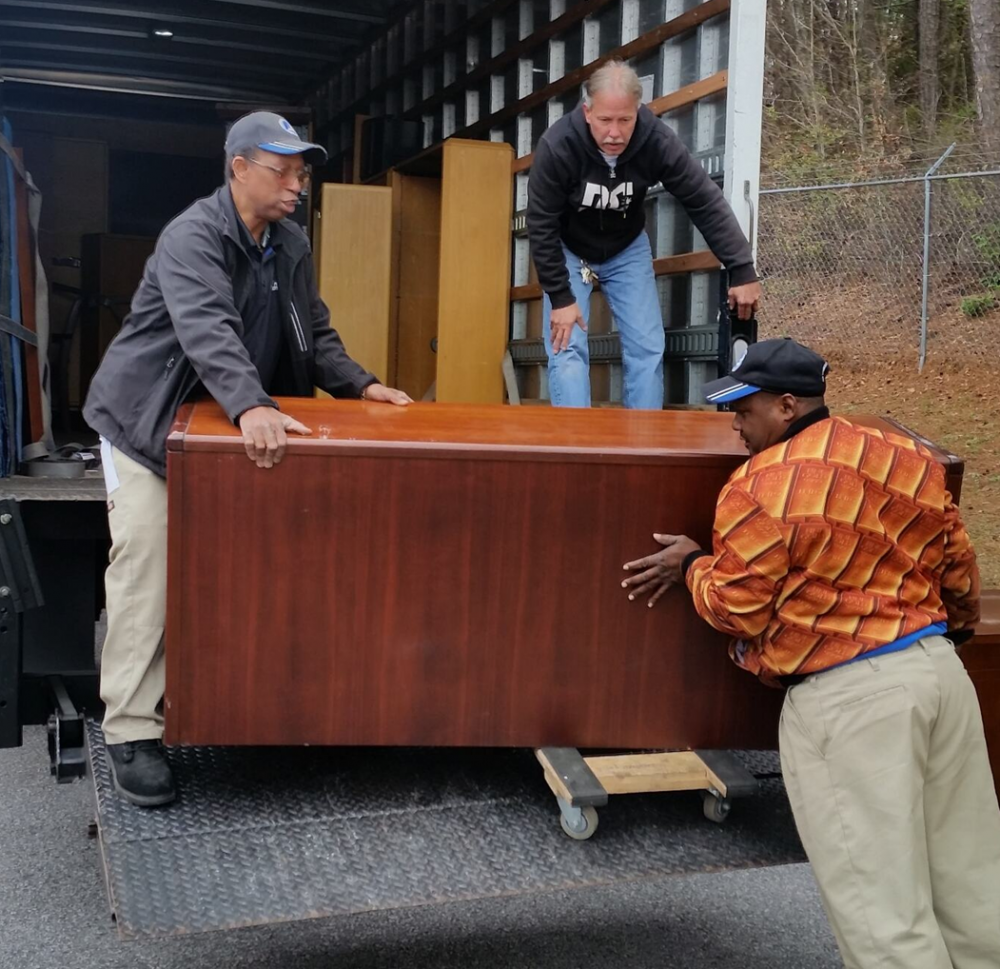
By designing donation into the transition plan, the pulp and paper company turned an operational project into a civic investment.
3. Align Workplace Strategy with Corporate Values
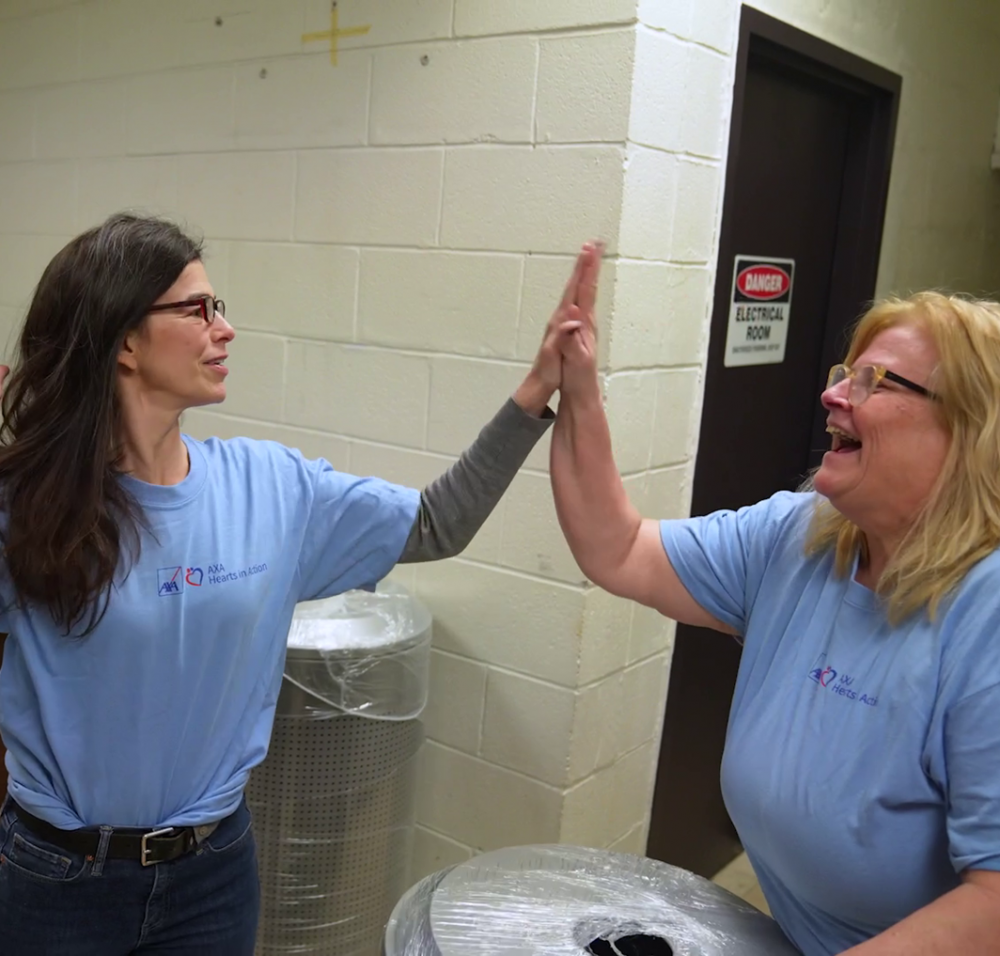
When AXA XL relocated its Manhattan office, circularity was part of the plan for the specialty risk division of global insurer AXA. Their Roots of Resilience strategy was a finalist for CoreNet Global’s 2025 Sustainable Leadership Award, recognizing outstanding achievements in sustainability and social impact. By eliminating landfill waste and donating to four local schools, AXA XL reinforced its CSR strategy while avoiding the pitfalls of greenwashing.
4. Measure What Matters
5. Build Systems That Scale
Whether it’s called adaptive reuse, risk reduction, efficiency, or responsible business, circularity has quietly become a proven business strategy for corporate real estate.
At Green Standards, we’ve seen this firsthand: Our clients have diverted more than 120,000 tons of surplus material from landfill, trusted us with over 100 million square feet of workspace transitions, and generated $40 million+ in charitable donations. Operating in 40 countries and collaborating with 25,000 nonprofits, 300 resellers, and 500 recyclers, we work with CoreNet Global members to turn decommissioning projects into measurable sustainability achievements. Behind the metrics are real outcomes: at the national non-profit Tahirih Justice Center, for example, donated furnishings helped create comforting spaces that support survivors of violence. It’s a reminder that corporate real estate decisions can have lasting community impact.
For CoreNet professionals, circularity represents the next evolution in portfolio strategy. It’s not just about waste diversion; it’s about designing smarter systems that extend the life and value of workplace assets. The path forward is clear: leverage existing inventory, empty warehouses, donate locally, measure impact, and scale what works. Circular practices now define how leading occupiers manage space transitions, bridging sustainability and business performance. The future of corporate real estate is circular, and it’s already taking shape.
Want to Hear More From Green Standards? Check Out Loop ‘Em In: How to Sell Circularity to Skeptical Stakeholders.

Learn more and join the movement toward a zero-waste workplace at circularworkplace.com
See What WDM’s Cynthia Milota Learned from the Build Reuse Conference.
This article was created in partnership with Green Standards. Images courtesy of Green Standards.