

As workplaces grow louder, faster, and more connected than ever, a quiet truth is emerging: people need places to pause.
The office is alive with meetings, collaborating, and simply sharing space with one another. As in-office norms rise, this renewed togetherness breeds connection, sparking deeper innovation, relationship-building, and purposeful cultural betterments. But…have we truly figured out what employees need to feel supported?
Recognizing the many ways people show up and work best, the days of gimmicky perks are behind us. We are having real conversations about health, well-being, and the different ways people find their best work mindset. Employers know the stakes: burnout risks, retention challenges, and the costs of recruiting and training. And for perhaps the first time, they’re genuinely listening. People want to feel considered in their environment, and ping pong tables aren’t cutting it. Proof of support is now a top factor in how candidates evaluate roles, and to understand the intention behind those promises.
Today’s workplace is saturated with inputs—notifications, conversations, overlapping initiatives, and expectations that follow us long after the workday ends. Overstimulation has become a daily reality. So how do we create moments of reprieve from the constant barrage? Where do you go when collaboration is the opposite of what you need? Or when you simply need a place to gather your thoughts, quiet the noise, and decompress?
Cue the Escape Room
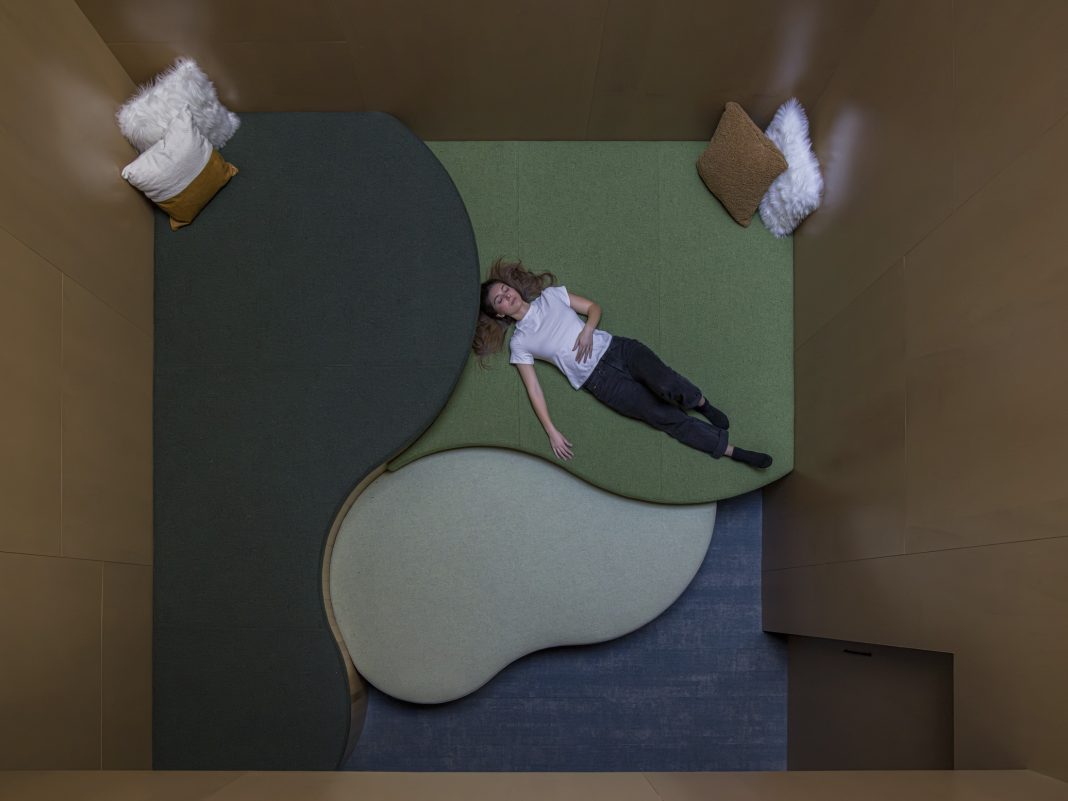
No, not the kind where you’re locked in and racing to solve clues. That pop-culture version is designed for an adrenaline rush, fun, and often loud, team-building adventure, and the thrill of turning anxiety into entertainment. What I’m talking about is the exact opposite: a modern-day workplace “Escape Room” where you can retreat on a rough day, find uninterrupted heads-down focus, or simply just be a human in need of calm. Think of it less like a challenge and more like a sensory deprivation tank, one that supports natural workplace postures while giving people permission to momentarily step away from their surroundings.
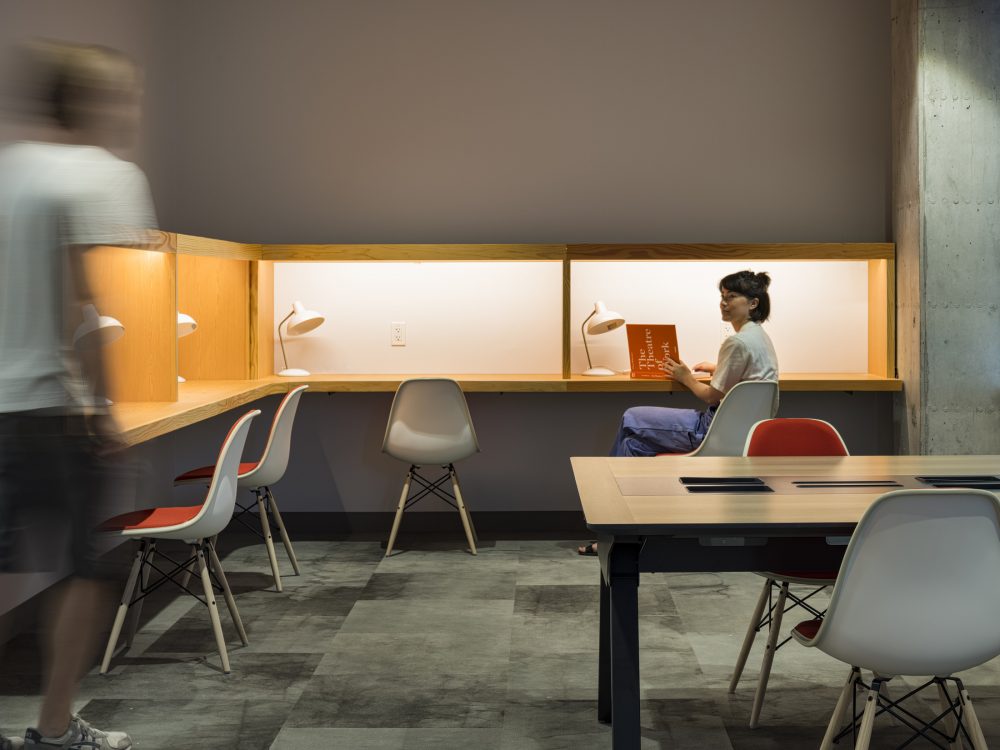
Design can authentically help users to balance collaboration and concentrated focus. Escape spaces need to make an obvious visual statement through features that communicate:
“I’m focused and not in a head space to be interrupted.”
“I’m overstimulated and need solitude to organize my thoughts.”
“Please respect my boundaries while I choose to be in this space.”
Sequence of Entry
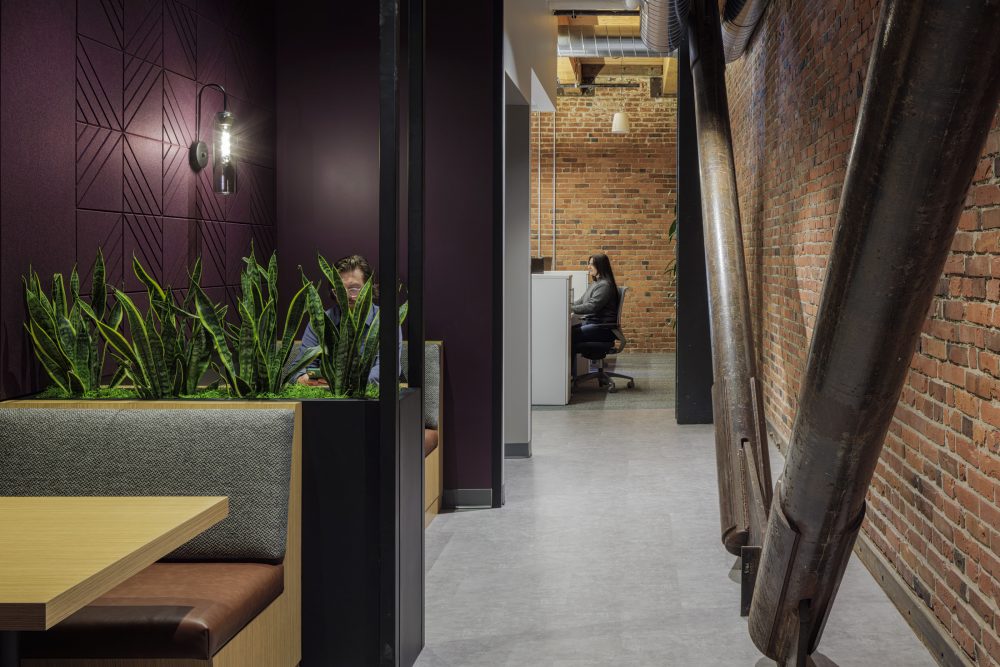
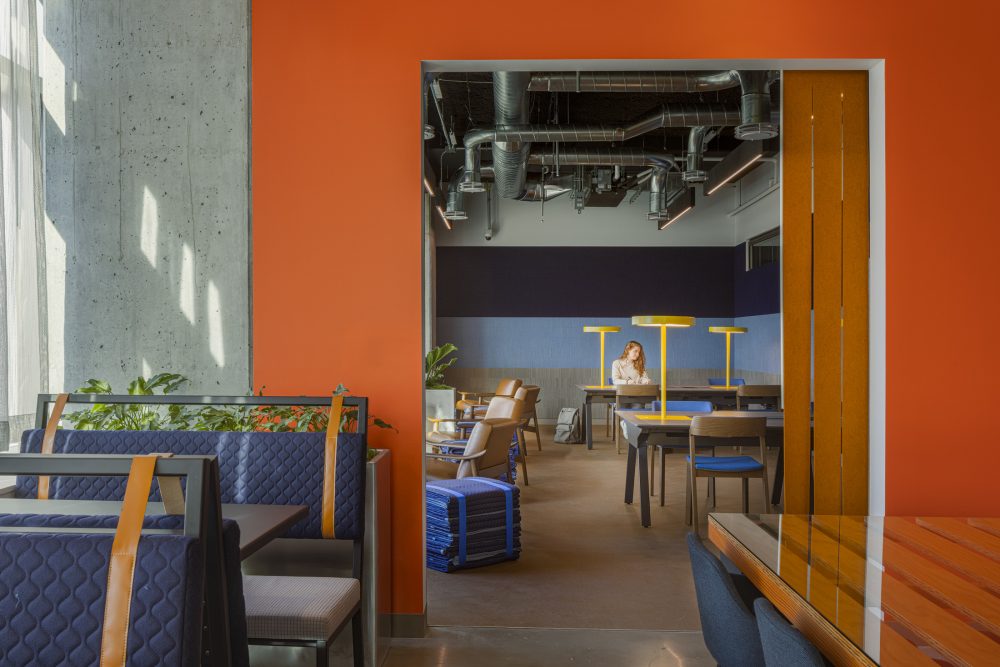
The path to a deep-focus space is critical to its function. Gradual shifts in privacy and visual layering create a soothing, intuitive entry sequence, while more fully enclosed options can be tucked within cores or deeper volumes of floor plate, serving as intentional destinations for those seeking refuge from the noise and distraction of an open office.
As users move further into the space, tactile and sound-absorptive materiality, controlled light temperatures, quiet air circulation, and soft color palettes can help ease users into a decompression mindset, giving them a greater sense of control over their surroundings. Choice and autonomy within these escape spaces allow users to feel seen and supported, able to select a setting that aligns with their current mood and the needs of their tasks.
Physical cues also send behavioral signals to all who enter: you are gradually transitioning into an area of reduced stimulation. Voices soften, conversations pause or require permission, and people often discover that the interruption they planned to make may not be as urgent as they thought.
Space That Just Gets You
As sensor-rich buildings become more common, the potential for AI-supported “escape” spaces is shifting from speculative to increasingly plausible. Many workplaces already use occupancy sensors, adaptive lighting, and responsive sound masking to create stable, comfortable environments. The next evolution is AI acting as a curator of use conditions, recognizing when a space is occupied and automatically adjusting lighting color temperature, airflow, and acoustic settings based on evidence-backed research that support the work mode being performed.
Instead of fully personalized biometric presets, the near-term opportunity is intelligent environmental tuning: spaces that transition into a “decompression mode” with softer lighting, warmer tones, and low-frequency soundscapes, or into “deep focus mode” with tunable task lighting, white noise, and minimal visual stimuli. These subtle yet research-supported adjustments can help users reset more quickly and reengage with clarity.
Proof of Care
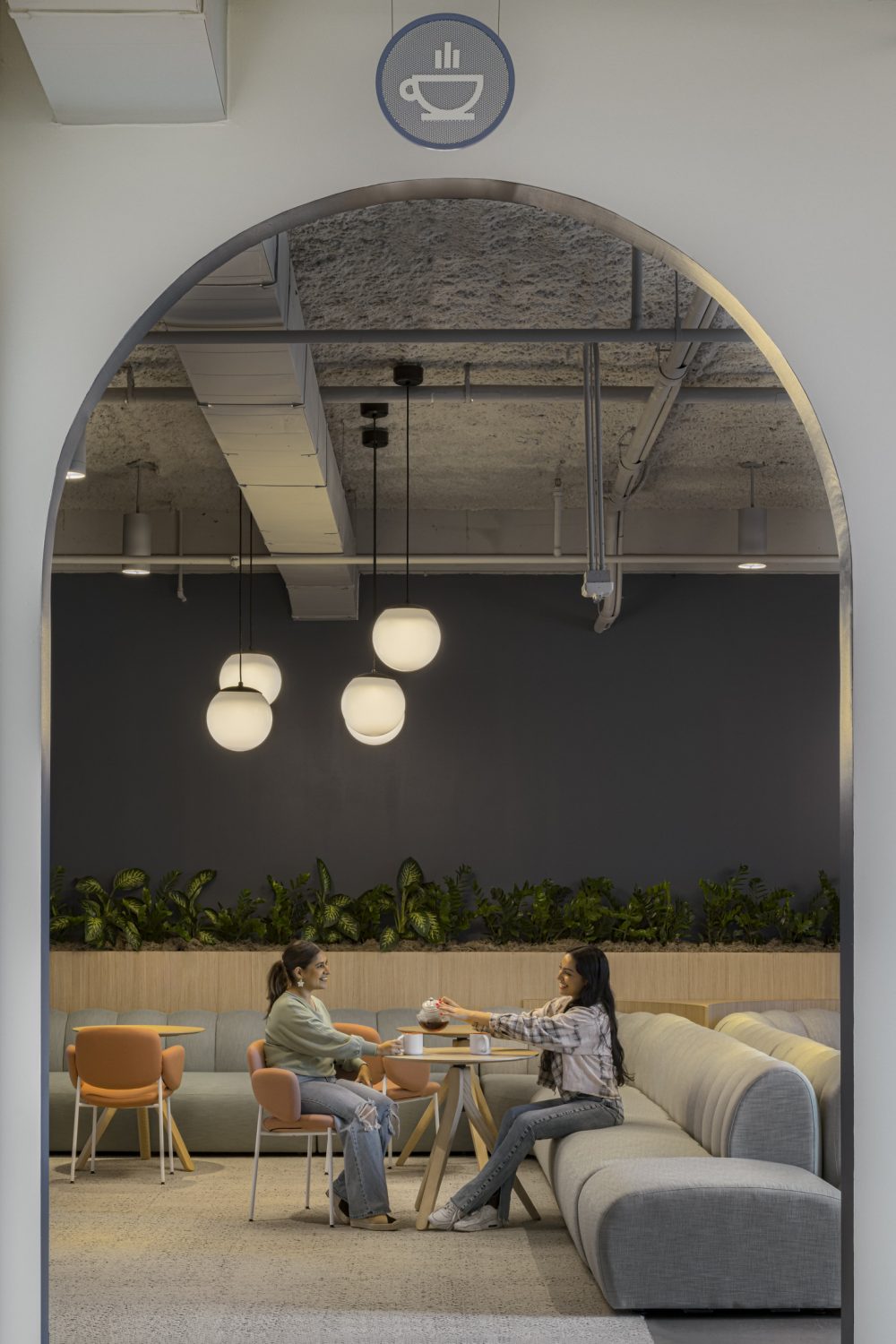
There isn’t a single formula for creating spaces that genuinely support people. Throughout the day, we all experience shifts in focus, energy, emotion, and cognitive load, regardless of whether we’re neurotypical or neurodivergent. Escape spaces acknowledge this range of human experience. They offer a place to reset during moments of overstimulation, regroup after difficult conversations, or simply find a quiet pocket for focus or calm.
Prioritizing these types of spaces in a program signals a deeper proof of care: it shows that design is responding to the whole person, not just their output. When environments provide flexible, universally supportive options, without stigma or prerequisites, they build trust and reinforce that well-being is an organizational value, not a perk. This kind of human-centered design endures because it addresses real needs in fluid, autonomous ways, giving people the freedom to choose what support they need in the moment. In a world where leaders are increasingly accountable for the well-being and success of their teams, escape spaces stand as tangible evidence of that commitment.
Special Thanks to Our 2026 Trends & Predictions Supporter:

Let’s design spaces that resonate and inspire great work. Explore the Resonant Spaces collection.