
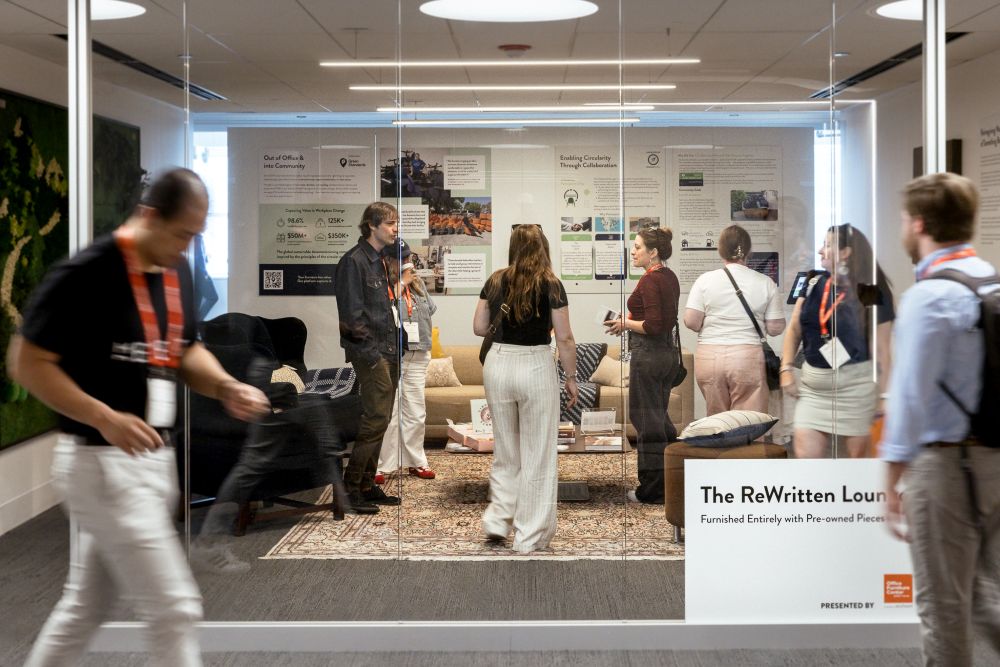

If the next generation of workplace interiors has a defining theme, it’s practicality: Thoughtful, forward-looking, and grounded in real-world needs.
Here’s where we’re seeing momentum headed into 2026:
1. Thriftiness and Reuse are Here to Stay
Organizations are realizing that reusing what they already have is good strategy on every front. As hybrid work continues reshaping space needs, flexibility becomes essential. That means:
- reconfigurable layouts
- modular furniture
- movable walls
- plug-and-play infrastructure
Why overbuild when you can evolve? Future-proofing is the new standard, and reuse is its strongest foundation. Bonus points: Reused furniture automatically meets Gensler sustainability product standards and the latest version of LEED recognizes reuse.
2. Zero-Waste Fit-Outs Move From Trend to Table Stakes
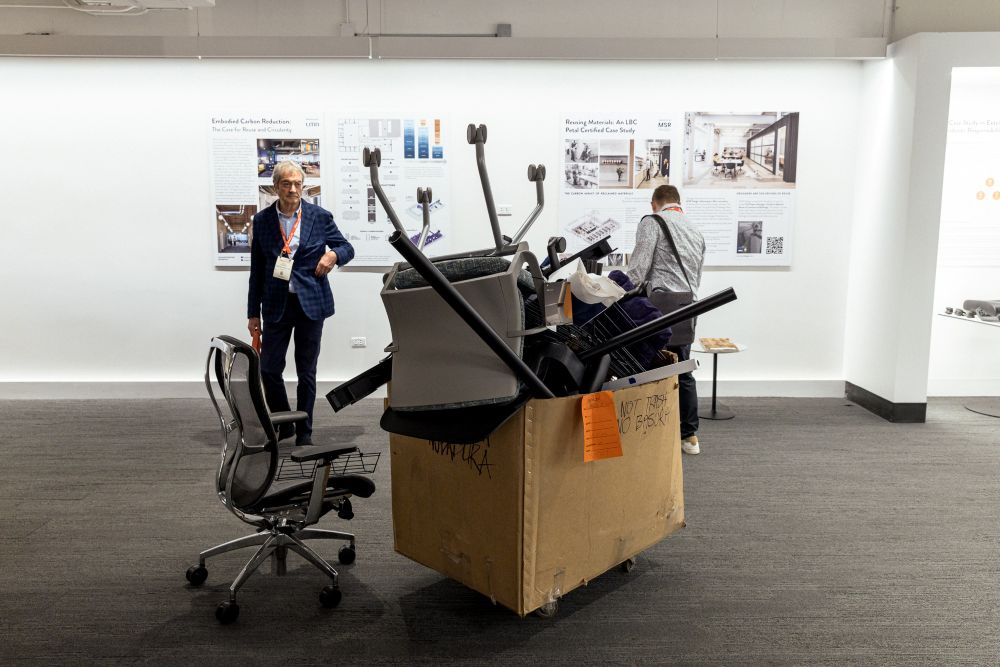
Zero-waste fit-outs were once the cutting edge of office design. Now, they’re becoming a standard expectation. Circularity is shifting from niche to an organizing principle, with the obvious cost savings driving the conversation.
Core practices are taking center stage:
- keeping materials at their highest possible value, whether through reuse, resale, donation, or recycling. (In other words, my day job at Green Standards!)
- designing for change so modularity and flexibility prevent unnecessary waste
- prioritizing reclaimed, refurbished, or remanufactured assets before buying new
- diverting as much renovation waste as possible from landfill. Measure it, celebrate it, and spread the word that there is a better way (And again, we can help!)
As a best practice, clients now ask for reuse upfront, and many write it directly into RFPs and design guidelines. Construction contracts increasingly mandate:
- 80–95% waste diversion
- partnerships with circular businesses that upcycle assets (like Green Standards)
- transparent salvage reporting and impact metrics, because what gets measured gets improved
By 2026, zero-waste won’t just be a differentiator. It will be:
- standard in RFPs
- required in corporate sustainability frameworks
- a competitive advantage for design and construction firms
- a practical lever for reducing Scope 3 emissions (Category 5: Waste generated)
- a visible expression of brand identity
A zero-waste office was once a differentiator. Increasingly, it’s becoming the future we’re all building together.
3. Design Thinking moves from Materials to Business Models
Beyond thrift and flexibility, a deeper shift is underway. Design-thinking frameworks are helping organizations move from one-off material choices to system-level transformation.
Using simple methods like circular sprints, cross-functional teams are coming together to:
- map value chains
- explore circular business models
- test ideas quickly
- iterate before investing
- uncover immediate cost-saving and waste-reducing opportunities, not just distant Net Zero goals
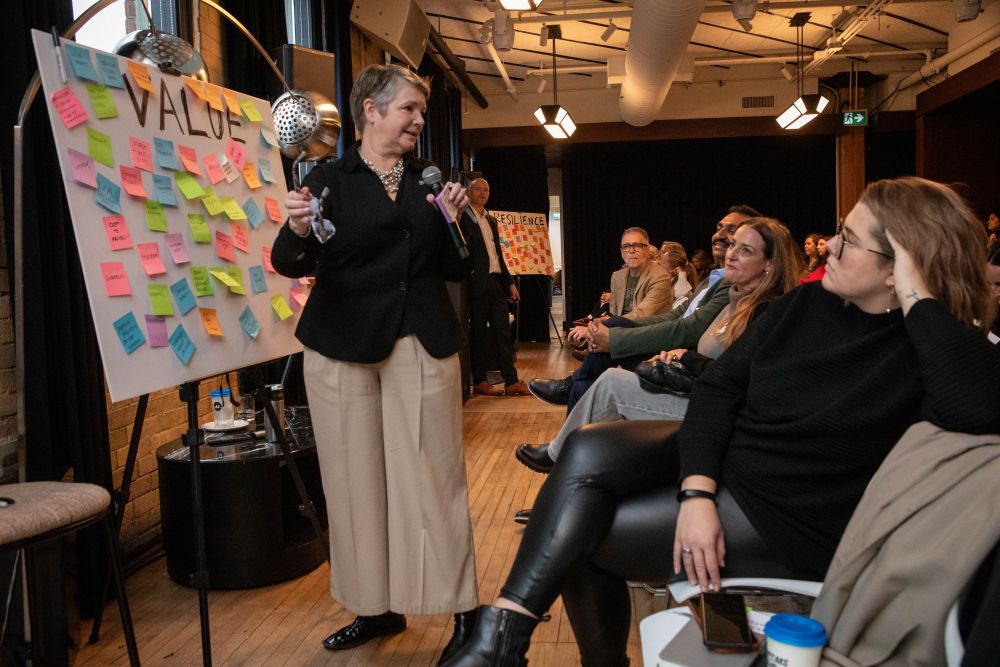
This shift is critical. Too many early adopters abandoned circular business models after the first imperfect iteration, only to return later when the cost of re-engagement was far higher. Real progress comes from prototyping, experimenting, and aligning teams around shared outcomes. Today’s leading workplaces use multidisciplinary collaboration — bringing design, facilities, finance, sustainability, and leadership around the same table — to embed sustainability directly into existing workflows. There’s no need to reinvent the wheel, but we do need to make sure everyone keeps it spinning. Green Standards has been facilitating these cross-functional sprints, and we’d be thrilled to support your organization if you’re interested in hosting one.
What’s happening inside offices mirrors broader movement across the built environment:
- Buildings are increasingly designed for reuse and material recovery, with more offices converting to residential or mixed-use spaces.
- Secondary materials like reclaimed steel, recycled wood, low-carbon concrete are becoming mainstream and cost-effective.
- Material passports and digital twins are gaining traction to track embodied carbon and material flows across lifecycles — and will soon be mandatory for furniture in the EU.
- Embodied-carbon reporting is helping organizations manage hidden carbon in materials and construction and hedge against future risks as carbon markets and costs evolve.
- “Buy Clean” and procurement-based carbon standards are pushing U.S. markets toward lower-carbon materials.
The Bottom Line: Practical, Stylish, Circular
Sustainable workplace design is evolving fast and getting smarter. These trends don’t require sacrificing aesthetics or experience. In fact, the opposite is true: the offices people love most are often the ones that embrace circularity, thriftiness, and design flexibility. That’s because they’re more authentic, adaptable, and aligned with the values of the people who work there. In 2026, the most compelling workplaces will be those that celebrate resourcefulness, innovation, and practicality. In other words, common sense will become increasingly common.
Special Thanks to Our 2026 Trends & Predictions Supporter:

Let’s design spaces that resonate and inspire great work. Explore the Resonant Spaces collection.
This article was created in partnership with Green Standards.