



Workplace wellness has become one of the most talked-about aspects of organizational design in recent years, and for good reason. Businesses have come to recognize that employee well-being is not just a “nice to have.” It is directly linked to performance, retention, innovation, and long-term profitability. The pandemic brought this reality into sharp focus, pushing leaders to confront the human side of work in ways that had long been neglected.
And yet, despite overwhelming corporate enthusiasm, with nearly 85% of large U.S. employers offering wellness programs and global wellness spending projected to exceed $94 billion by 2026, burnout rates continue to rise. Employee mental health metrics are trending in the wrong direction. This disconnect raises a critical question: if the investment is there, and the intentions are good, why aren’t we seeing better results?
A recent article in Harvard Business Review offers a compelling explanation: most well-being efforts are misdirected. They focus on the individual, not the system. In essence, we are asking employees to take better care of themselves without addressing the environments that often cause their stress in the first place. Meditation apps and mindfulness courses may offer temporary relief, but they cannot solve the systemic problems of chronic overwork, poor leadership, lack of autonomy, or toxic workplace culture.
We believe this issue also reflects how companies are designing for wellness. Treating well-being as a discrete feature, confined to a wellness room, an app, or an occasional seminar, misses the mark. Just as modern healthcare increasingly recognizes that health is shaped by environmental and social factors, workplace wellness must be embedded into the systems and spaces where people spend their time. It needs to be a core function of the built environment, not an afterthought.
This is where design has the power to lead. Wellness should not be the exclusive responsibility of HR departments. It should be viewed as an infrastructural challenge, one that architects, workplace strategists, and designers are uniquely equipped to address. The built environment affects how people move, how well they sleep, how connected they feel, and how effectively they work. It influences everything from cognitive clarity to cardiovascular health.
Designers have a critical role to play in rethinking workspaces for well-being. Just as healthcare facilities are built not only for treatment but also for recovery, rest, and emotional resilience, workplaces should support thriving, not just productivity. Every design choice should prompt the question: how does this make employees feel? Does it support focus, comfort, movement, connection, or autonomy?
As organizations evolve in a post-pandemic world shaped by hybrid work, global talent competition, and rising employee expectations, those that treat well-being as a core design challenge will gain a competitive edge. Offices should no longer be thought of as rows of desks or centers of output.
Offices should be places that energize, support, and care for the people within them.
Thinking of the workplace as a healthcare delivery system may seem ambitious, but it’s a logical next step. Just as hospitals are designed to promote healing, offices should be designed to prevent burnout. That includes thoughtful layouts that encourage movement, access to natural light, acoustic control for focused work, and spaces that support both social interaction and quiet reflection.
This shift also means building environments that acknowledge the diversity of employee needs. Design should support neurodiverse individuals, caregivers, introverts and extroverts, early risers, and night owls. Workplaces that offer flexibility, personalization, and genuine comfort are not only more inclusive, they’re more effective.
Ultimately, wellness cannot remain a surface-level initiative. It must be baked into the very fabric of workplace strategy, operations, and design. When space reflects empathy and intention, employees are more likely to feel supported and stay engaged. And when people feel good at work, they do better work.
This concept reshapes our assumptions of what the office is for. The workplace is no longer just a site of labor. It is a shared ecosystem that must support human well-being in real, measurable ways. The right products and design solutions play a defining role in how we translate wellness at a systemic level. Below, we highlight a selection of products designed to bring this healthcare-informed mindset to life.
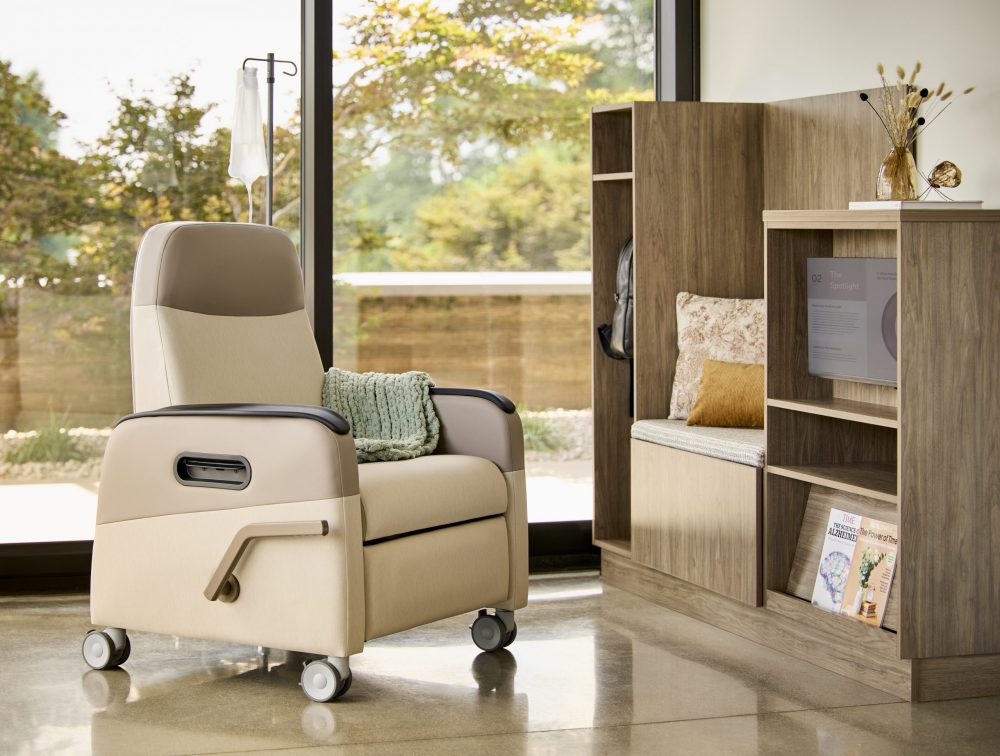
Havei
The Havei recliner collection offers functionality and durability that is ideal for workplace environments. Havei combines the comfort and visual warmth of residential design with the performance and longevity of contract furniture.
For respite areas, meditation spaces, and wellness rooms, Havei offers a variety of features. Its infinite-position recline and quiet operation create a restorative environment for short breaks or recovery periods. Havei’s ergonomic design and optional heated seat and back encourage relaxation and stress reduction, while its integrated USB ports ensure employees can recharge both personally and digitally.
Alterna
Alterna modular casework is a flexible and durable storage, locker, and cabinet solution that is ideal for a variety of spaces. For workplace wellness, it can be used to create lockers for workout spaces or community respite areas. Its cabinet components include sink and waste options, along with storage that accommodates a refrigerator, making it a comprehensive option for mother’s rooms and break areas. Alterna is a multipurpose solution that can be built to create a custom space. Unlike custom millwork, it offers the unique advantage of being 100% reconfigurable throughout its entire lifespan.
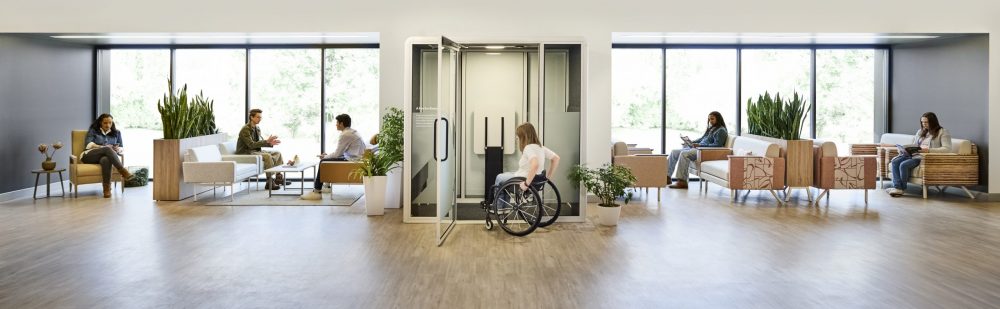
Kolo Pods
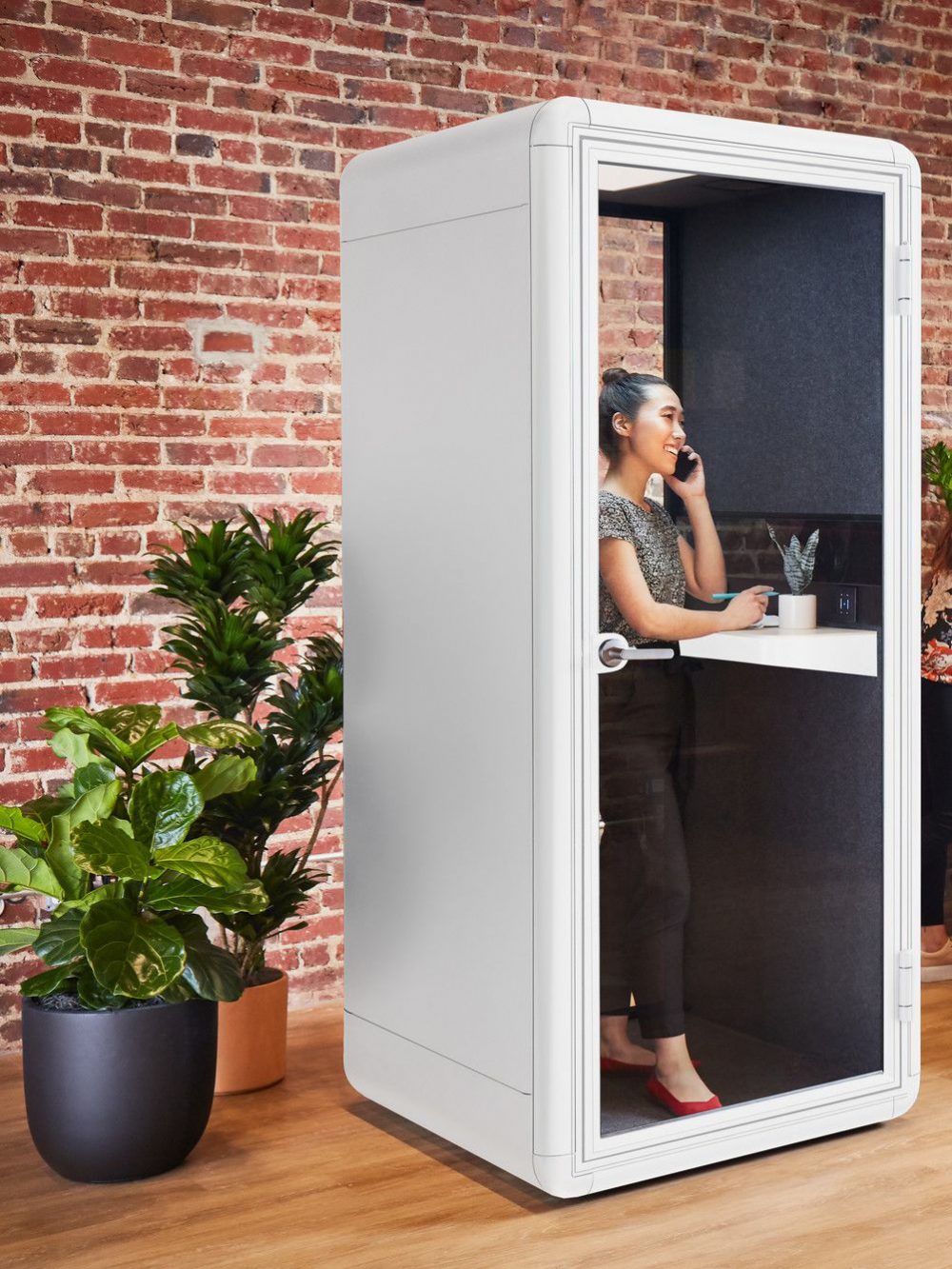
Designed to offer accessibility to peace and quiet in an open environment, Kolo Pods provide private respite areas within workplace settings. Its anti-eavesdrop design reduces speech intelligibility and dampens sound, creating a space for confidential conversations or quiet respite. Not only does the pod keep noise in, it keeps environmental sounds out, providing a space free of distractions. For additional visual privacy, partial frost and full frost privacy decals can be applied to the glass walls or doors. By providing a place to destress and find comfort, facilities can help mitigate burnout and boost employee retention.
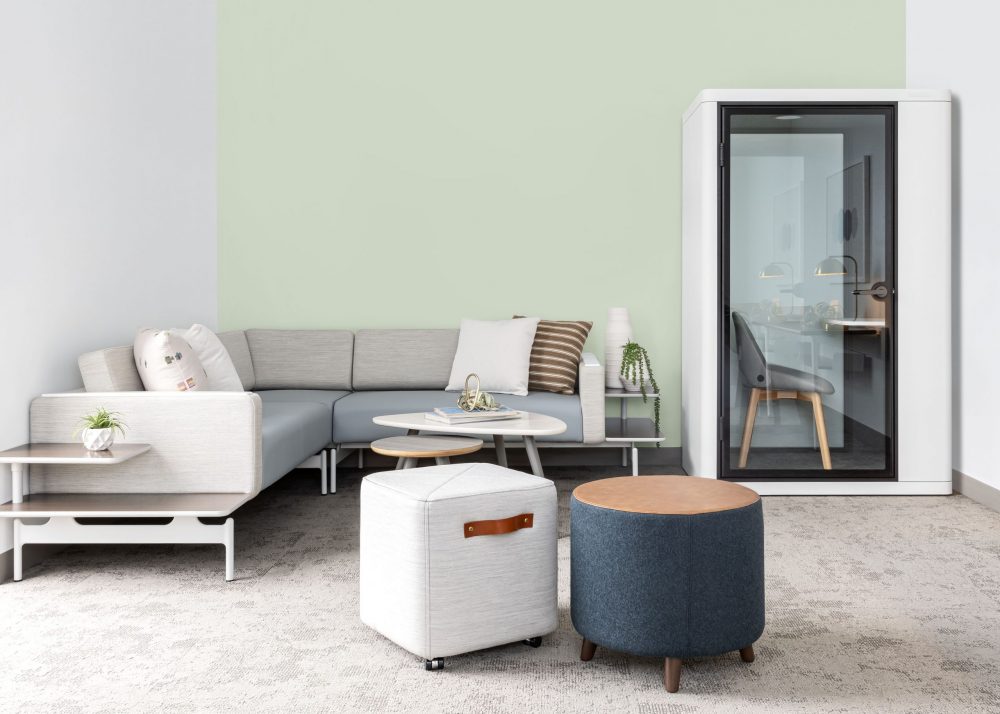
Embra
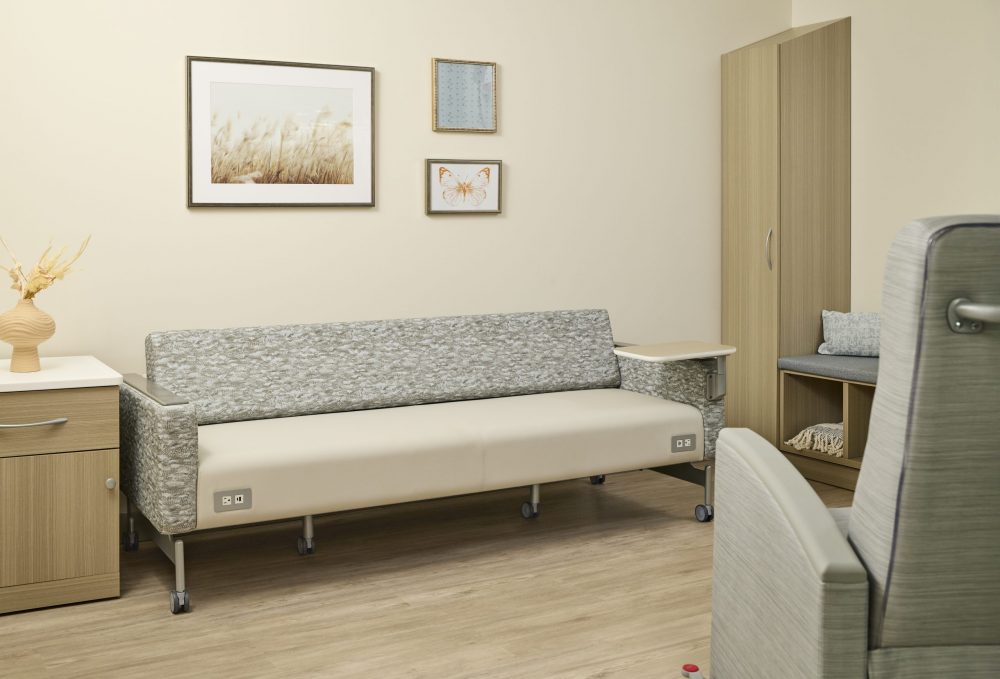
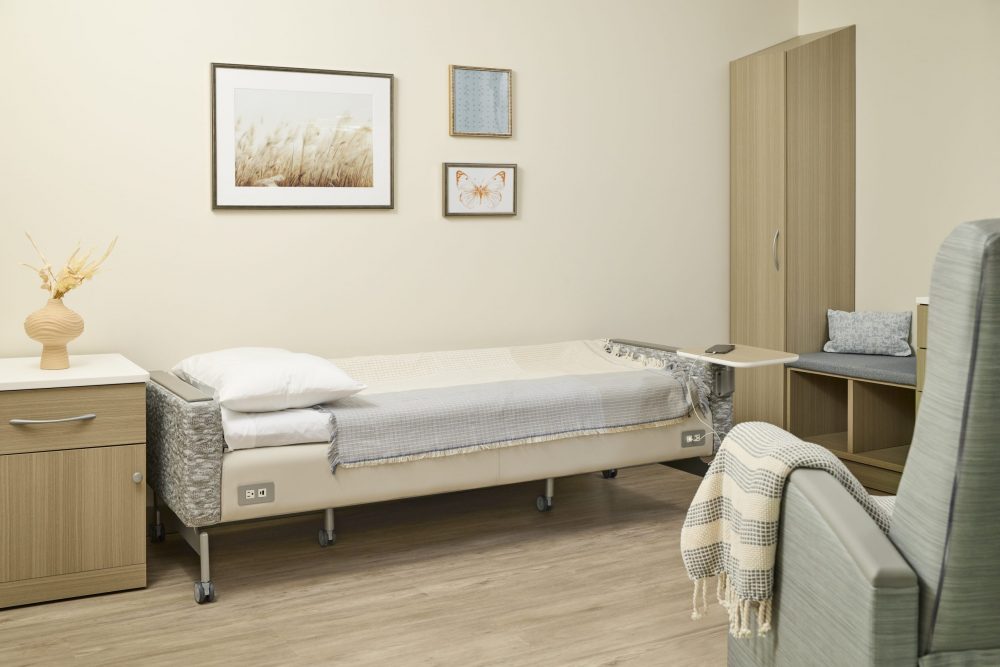
Featuring clean, modern lines and a home-like aesthetic, Embra provides a sense of warmth and comfort. This collection of freestanding lounge, sleep sofas, and modular community seating easily creates spaces for respite, relaxation, and quiet reflection. Embra was created with person-centered design at its core. It is intuitively designed with integrated features including accessible power, storage for personal items, tables, and lighting. These design elements naturally bring humanity into wellness spaces.
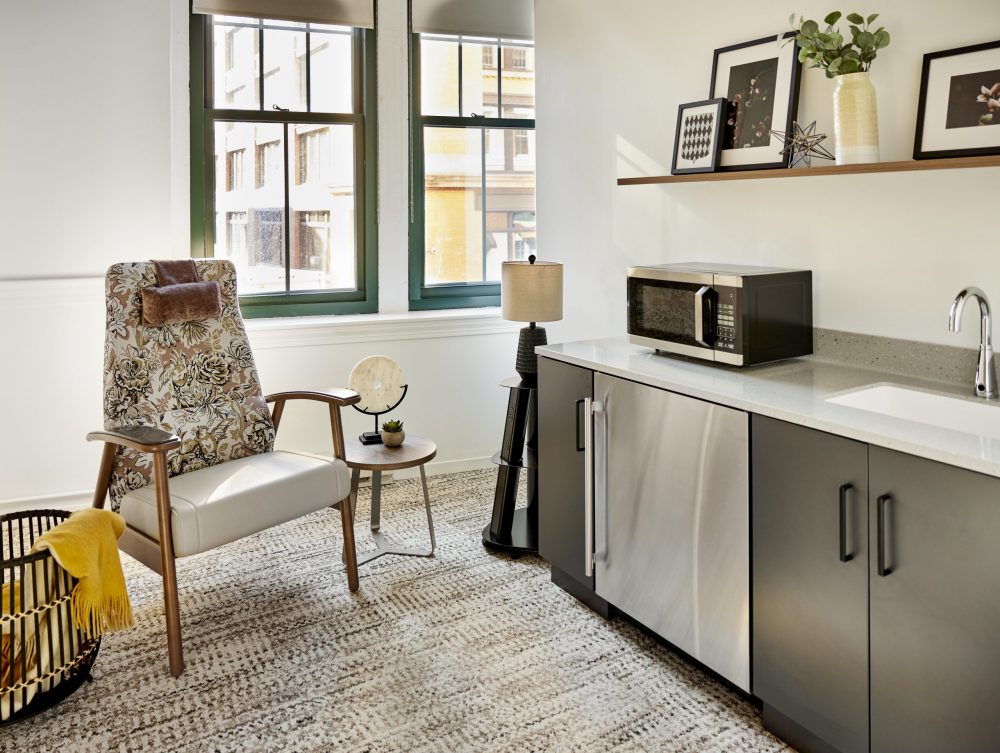
Ezzeri
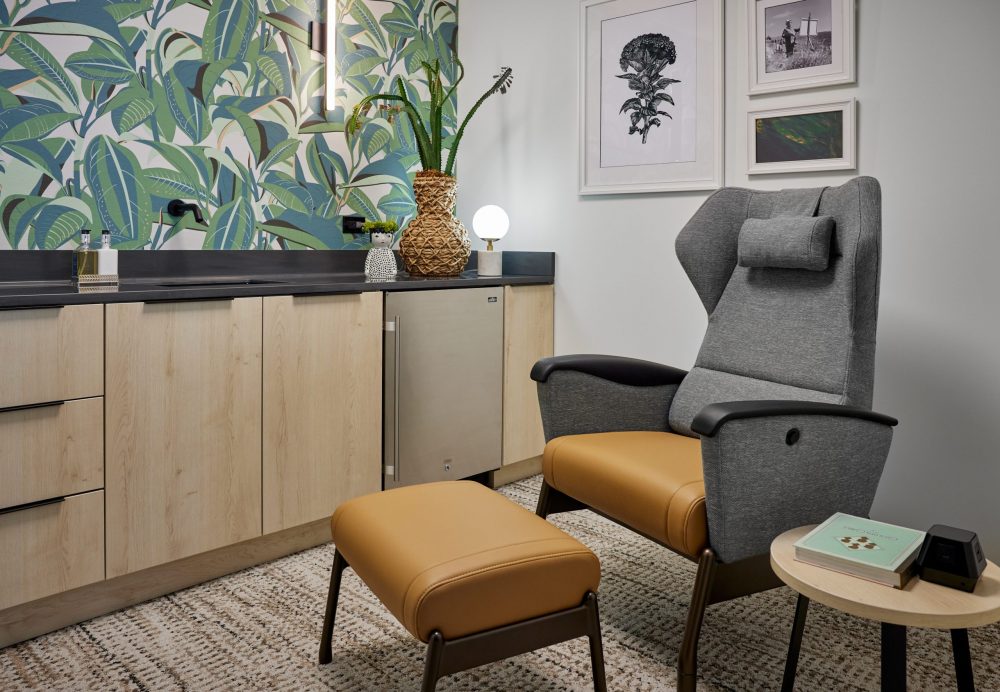
Ezzeri combines innovative ergonomic support with purposeful design. Featuring multiple back styles, an optional head pillow, and a coordinating ottoman, Ezzeri is a light-scale, agile seating solution that is perfect for relaxation, unwinding, and reconnecting. Respite seating, designed for relaxation, helps employees truly disconnect for a few minutes. This allows them to return to their tasks with greater clarity, sharper focus, and improved problem-solving abilities.
These are just a few of the solutions that can support a caregiving approach to workplace design. The return on this kind of investment is clear. Healthier, more engaged employees lead to stronger, more resilient organizations. McKinsey research shows that companies with high well-being scores also perform better financially. That’s not a coincidence, it’s a reflection of what happens when businesses treat their people as their most important asset.
Design has the tools, insights, and creativity to help organizations meet this moment. By embracing a healthcare mindset, we can create spaces that don’t just look good. They do good. That’s the future of work. And it’s time to build it.
This article was created in partnership with Kimball International.
Special Thanks to Our 2026 Trends & Predictions Supporter:

Let’s design spaces that resonate and inspire great work. Explore the Resonant Spaces collection.