



For decades, workplace design followed a conventional model, where decisions about space and experience were driven primarily by leadership.
Today, a new approach is emerging: one that starts from the bottom up. Workplaces are now being designed around the needs, values, and behaviors of the next-generation workforce, who will shape the future of their companies. Organizations that want to attract and retain top talent are intentionally creating environments that resonate with them.
Younger generations are driving a new set of expectations around comfort, wellness, and experience that older models of workplace design often did not address. Residential cues and hospitality-inspired environments have become the baseline. The days of sterile minimalism are fading; Gen Z gravitates toward visually rich environments that stimulate creativity and reflect a brand’s identity with honesty and substance. Landlords and building owners are responding, investing in higher-end tactile materials and deeper detailing because visually engaging spaces help companies attract talent that refuses to settle for generic.
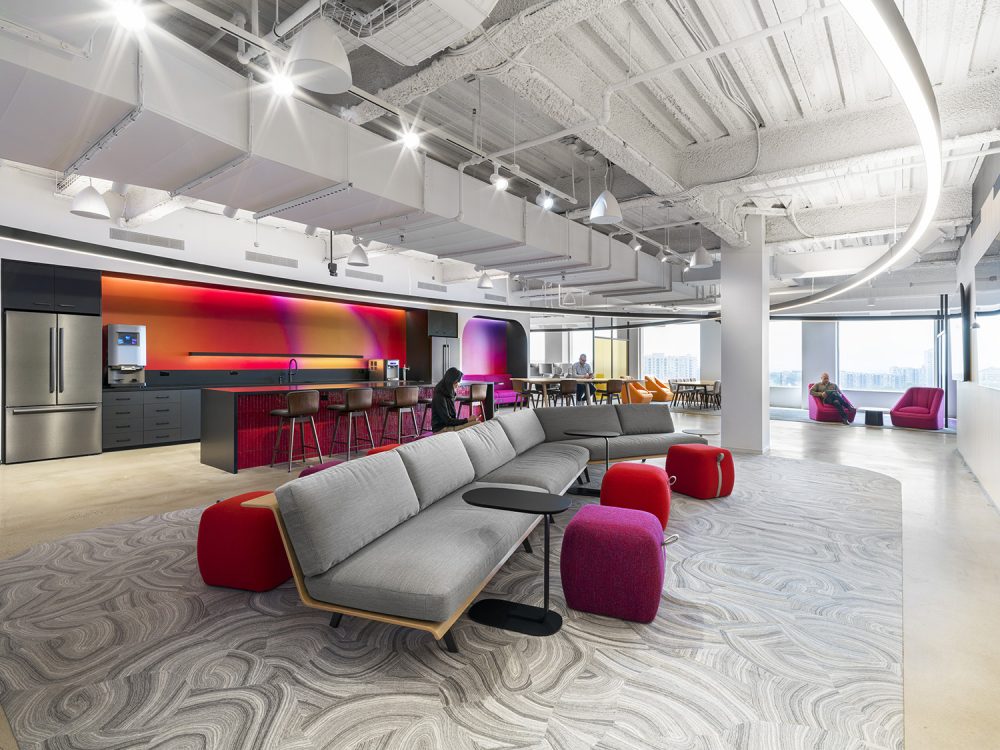
For Gen Z and younger millennials, air quality, acoustics, daylight, comfort, and mental well-being are non-negotiable. They view wellness as a lifestyle, not an amenity. These expectations are not trends; they are tied to how this generation defines a supportive workplace. Design does not just respond to these needs; it shapes behavior, influencing how people rest, collaborate, disconnect, and perform. By creating purposeful circulation, inviting recharge areas, and social areas that encourage connection, the office cultivates healthier routines and becomes a place employees are drawn to, not just work within.
Technology adds another layer. Younger professionals expect technology to be mobile-first and incredibly intuitive. Hybrid work requires this flexibility: the ability to jump in and out of calls, move through different work modes easily, and stay connected from anywhere. Technology can no longer be an afterthought; it must be fully embedded into the firm’s nervous system, enabling speed and ease of use.
The next-generation workforce views inclusivity as an expectation as well. They look for spaces where everyone has an equal experience regardless of background or work style. This mindset pushes design beyond compliance and into universal belonging: designing environments that give everyone access to the same quality of space. Sustainability, too, matters more now than ever. Even when it costs more, younger generations expect responsible material choices and transparency. They want to work for companies that act with purpose and are willing to invest in a better future.
This bottom-up shift ultimately forces leadership to rethink what a workplace represents. Leadership today must look beyond inherited norms and use design as a tool to empower people, encourage collaboration, and support well-being. The right environment doesn’t just accommodate employees, it amplifies their potential and strengthens the culture that will define the company for years to come.